
You’re Not Lazy: Neurodivergence, Burnout and Self-Trust
- Podcast Guest: Dana Kabyla
- Podcast Host: Laura Duggan
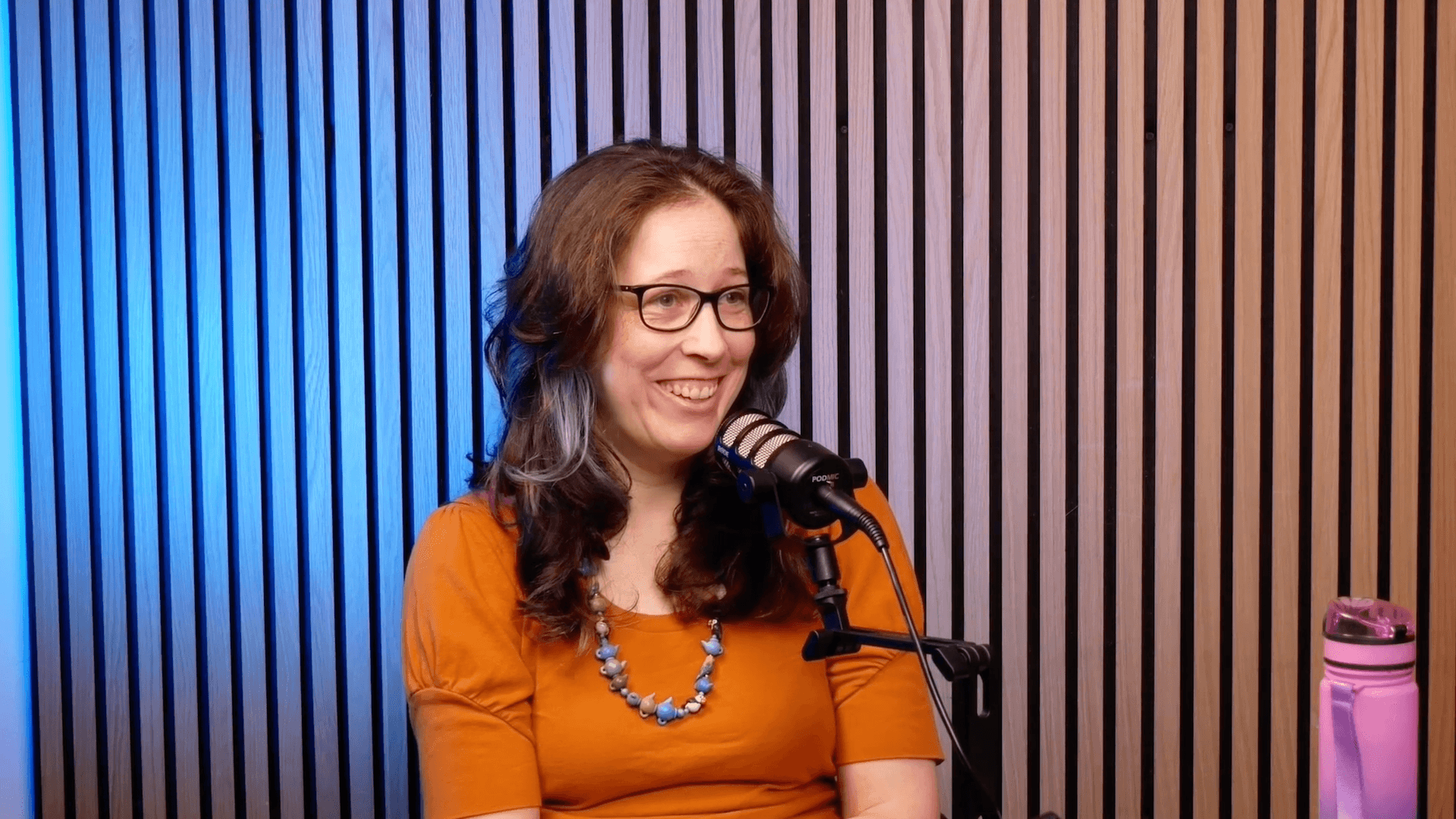
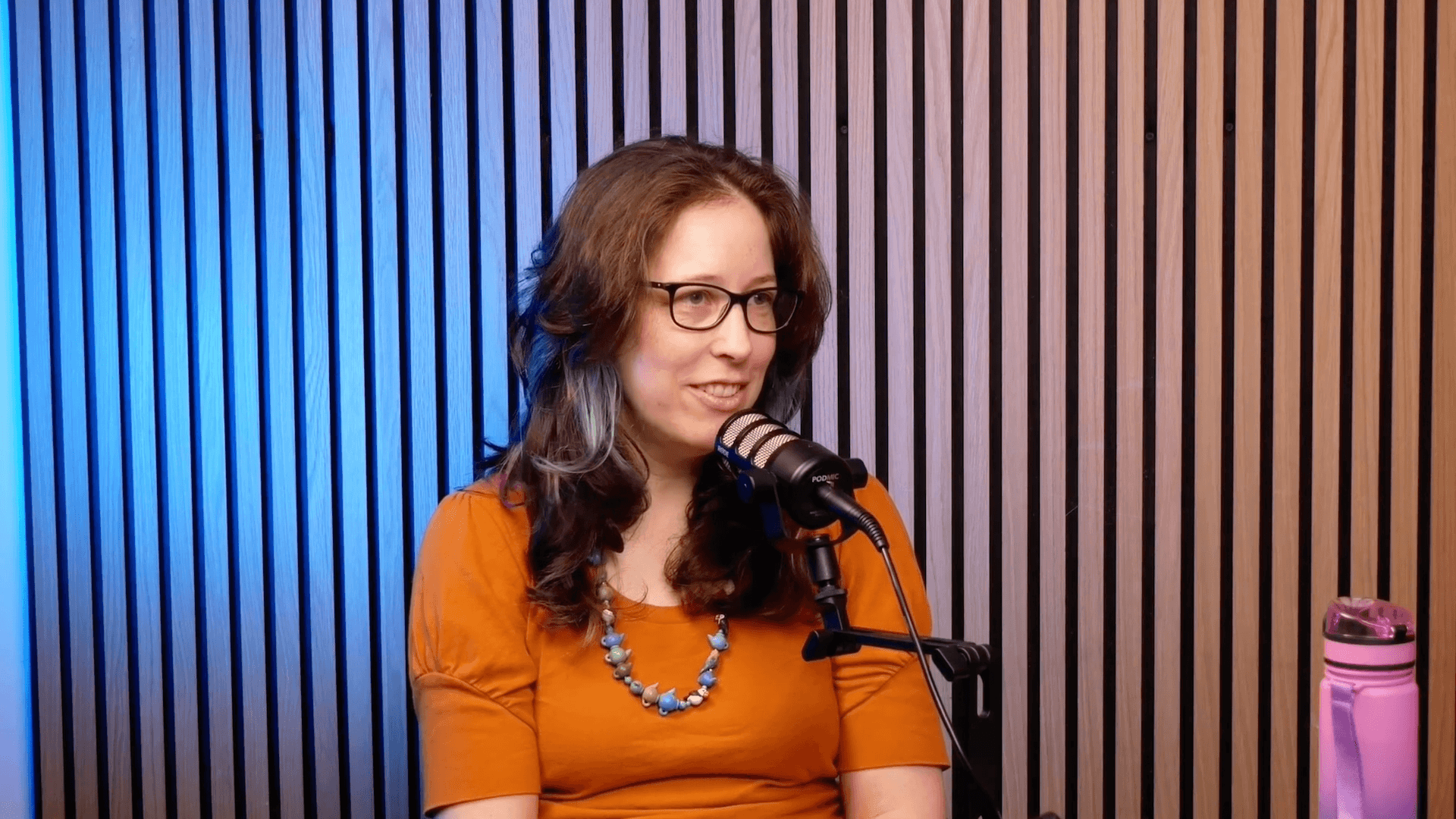
In this episode of The Right Therapist, counsellor and narrative therapist Dana Kabyla explores neurodivergence, identity, and the systems that shape how people understand themselves.
Drawing on lived experience, Dana challenges the idea of “laziness,” reframing it as a mismatch between neurodivergent ways of being and the demands of a productivity-driven world.
The conversation unpacks masking, burnout, and internalised ableism, and how many neurodivergent adults come to see themselves as “failed” when they cannot meet normative expectations. Dana introduces narrative therapy as a way of separating people from problem-saturated identities, and highlights the importance of recognising resistance, survival, and alternative stories.
They explore diagnosis, self-identification, and barriers to accessing support, alongside the emotional complexity of discovering neurodivergence later in life.
Dana also shares the concept of neuro rewilding — reconnecting with natural rhythms, needs, and more sustainable ways of living beyond rigid societal norms.
The episode includes a live therapy segment demonstrating how dominant self-criticisms can be externalised and reframed, allowing space for compassion and self-recognition.
Listeners will come away with a deeper understanding of neurodivergence, why shame-based identities form, and how more flexible, compassionate narratives can support meaningful and sustainable ways of being.
Dana Kabalia
Listen on
Talking Points
- 00:00 – Introduction to Dana Kabyla
- 01:20 – Who Dana works with and how she practices
- 03:10 – Narrative therapy and social justice
- 05:00 – Why people think they’re “lazy”
- 07:30 – Neurodivergence, visibility and capitalism
- 10:10 – Diagnosis, cost and access barriers
- 12:30 – What happens after diagnosis
- 15:10 – Lived experience and ethical practice
- 17:40 – Transparency and demystifying therapy
- 22:10 – Live therapy session begins
- 28:20 – High school, loss and fatigue
- 32:40 – “The environment was chronically fatiguing”
- 34:40 – Reading as resistance
- 36:50 – Externalising “the disappointment”
- 39:00 – Working hard, parenting and self-perception
- 43:20 – How narrative therapy works in practice
- 47:00 – Dreams, PDA and rejection sensitivity
- 53:10 – Neurodivergence and neuronormativity
- 58:00 – Neuro rewilding and neuro taming
- 1:03:10 – Burnout and reclaiming parts of self
- 1:08:20 – Spiky profiles and real-life examples
- 1:12:20 – Parenting and community support
- 1:15:00 – Diagnosis risks and systemic barriers
- 1:17:10 – “Die thoughts” and the death song
- 1:20:00 – Closing reflections
Transcript
- 00:00 – Opening
Laura: Today I’m speaking with Dana Kabyla, a lived-experience neurodivergent counsellor and narrative therapist based in Melbourne. Dana supports neurodivergent folk to live meaningfully and sustainably, drawing on narrative therapy, Jungian coaching, and the practice of neuro rewilding — reconnecting with natural rhythms, unlearning ableism, and reclaiming more authentic ways of being.
With her own spiky profile and a background in speech pathology, Dana brings humility, humour, and creativity to her work. I’m looking forward to exploring neurodivergence, neuro rewilding, and the power of story in shaping our lives with you.
You’re listening to The Right Therapist, where we demystify therapy. We’d like to begin by acknowledging the Traditional Custodians of the land on which we live and work. We pay our respects to Elders past and present, and extend that respect to all Aboriginal and Torres Strait Islander peopleslistening today. Dana: Thank you. Welcome.
- 01:20 – Dana’s Practice & Who She Works With
Laura: Can you tell us a little bit about your work — who you work with and the type of therapy you practise?
Dana: I work mostly one-on-one with people either in person in Thornbury or online, especially if leaving the house isn’t the go. Some people choose to have their camera off if they don’t feel like being perceived visually that day. For some people, if spoken language isn’t accessible, I can also do text-based support — for example, for situational non-speaking.
I mostly work with neurodivergent adults: people who are formally diagnosed, self-identifying, questioning, or simply people who might benefit from my lived experience whether or not they use that label.
- 03:10 – Narrative Therapy & Social Justice
Laura: Can you tell us a bit about how you work with people, and maybe about narrative therapy?
Dana: Narrative therapy, as I’m studying it through the Dulwich Centre and the University of Melbourne, is really a social justice approach to therapy. A core idea is that the person is not the problem — the problem is the problem.
We’re always questioning dominant discourses and how they affect individuals, because people often feel like the problem is internal to their brain, body, or being, while broader structures of power and oppression get off pretty scot-free.
For me, narrative therapy is about decentring myself while remaining influential. The person is the expert in their own life, and I can be a connecting point — from my own stories and from stories others have generously shared with me — to help people navigate the broader world.
- 05:00 – The ‘Lazy’ Story
Laura: Can you give an example of something that can feel like a problem in the individual, but is actually structural?
Dana: A lot of people come in with the belief that they’re lazy. I can see how hard they’re working, and I can’t believe lazy is the term they’re applying. But the way their brain works doesn’t fit the dopamine life-admin tasks or work-admin tasks that society rewards.
People come in feeling like failed adults — ‘I just can’t seem to do the thing other people do.’ They arrive with a lot of negative self-identity that’s been placed on them by institutions that have an idea of a norm they’re just not fitting into.
The joy of the work is the multi-story development of all the ways they’ve survived and resisted those systems, and all of the knowledges, skills, and talents they already carry.
- 07:30 – Visibility, Stereotypes & Capitalism
Laura: How do you see that broader picture around neurodivergence?
Dana: If we think about what visibility is available for neurodivergence, it’s mostly children. There’s an infantilisation of neurodivergence. It’s mostly white, mostly male, and when it appears in adulthood it’s mostly in ways that benefit capitalism — maths, science, technology, productivity.
A lot of the folk I see don’t want to be endlessly producing. They may be incredibly creative, really connected to sustainable practice and mutual aid, and this idea that they’re lazy within a consumer-capitalist system — I think the system is the problem.
The stereotypes also revolve around how uncomfortable a neurodivergent person makes more neuro-normative people feel. That becomes part of how diagnosis is made. If you camouflage and fly under the radar, you may not make people uncomfortable, but you might be in intense distress, having meltdowns or burnout, and then it can be harder to access support.
- 10:10 – Diagnosis, Cost & Access
Laura: It sounds like there’s a huge amount of labour involved just in navigating the world, let alone getting help.
Dana: Absolutely. Even if you fit every stereotype, diagnosis is expensive. Public waiting lists can be eighteen months or two years. Private diagnosis can cost thousands of dollars, often through very short appointments where you don’t get to tell much of your story.
You may get a report that lets you meet criteria, but not necessarily a report that gives you much understanding of yourself.
If you want targeted ADHD medication, you need a psychiatrist. If you want funding and certain supports, you need a formal diagnosis. But for people who aren’t seeking medication or funding, self-identifying can be really important, even if some settings won’t take it seriously.
- 12:30 – After Diagnosis
Laura: And when someone does get a diagnosis — what next?
Dana: Usually by that point they’ve spent years chewing it over — am I, aren’t I, what about that person in the family tree, what about the old misdiagnosis? Neurodivergent imposter syndrome is very real. People wonder whether they’re taking up space somewhere they don’t belong, or whether they’re just making excuses.
Once the diagnosis arrives, there can be relief, grief for the younger self who didn’t know, shame linked to internalised ableism, and a lot of questions about disclosure. Who do I tell? Who will be affirming? Who will react badly? Sometimes the strongest pushback comes from other neurodivergent people who haven’t yet been able to look at their own internalised ableism.
In families of origin you often hear, ‘You’re not, you’re just like us.’ And often the answer is: yes, exactly.
- 15:10 – Lived Experience, Ethics & Insider/Outsider Practice
Laura: I can get such a sense of the rich support you would bring to somebody who’s grappling with all of this.
Dana: We need all our allies. We need therapists not doing harm, researchers not spending money on eugenics and assimilation, and we need to call out mother-blaming and other harmful narratives. But lived experience does offer something different.
I’m an insider-outsider with the people who visit me. Sometimes I can say, ‘Yes, I get that,’ or, ‘Because I get my own version of that, I can imagine what that’s like for you.’ And other times I’m an outsider and I need to stay accountable to that.
I’m also connecting people to resources and to ideas that have helped others — always carefully, always ethically. That movement between insider and outsider is an accountability practice for me.
- 17:40 – Notes, Transparency & Demystifying Therapy
Laura: You also seem very transparent in how you work.
Dana: I take a lot of notes in sessions, as long as it doesn’t make people uncomfortable, because I really want their language — their exact words. I come from speech pathology, where I learned how to create intelligent summaries of clinical information. But narrative therapy has me unlearning some of that. People said it how they meant it, and we want to catch that.
After each session I send an email with some reflections and some of my notes — things I’m celebrating, things we touched on, things that may or may not be helpful. Words may not stick around after the session, especially in neurodivergence. Or they can change shape and become more self-critical. So it helps to have something stable to come back to.
I’m open to people recording parts of sessions or bringing someone from their own community if that helps keep me accountable. Therapy doesn’t belong to me. It’s their information, their process, their time.
- 22:10 – Live Therapy Segment Begins
Laura: I’m stepping into the client chair for a little while. The thing that feels very alive for me is the idea of laziness. I keep being surprised that people around me think I’m working very hard, because I feel like I’m not productive enough and so I have to work harder. I’m not someone who needs the house tidy before I can sit down, but I do have this belief that maybe other people would do what I do faster, so I have to work harder because of my own failing.
Dana: When did the idea of lazy first come into your life?
Laura: I know I wasn’t a lazy kid. I was feisty. I was active. I was a farm kid. I just wanted to be doing things all the time — out with animals, with birds and horses especially.
Dana: What do you think it said about young you that you were so ready to tend to a hurt bird?
Laura: I think I wanted something that needed me. Care was really important to me. And I struggled with aspects of farm life — especially killing animals. I was deeply rattled by it in ways my sisters weren’t.
- 28:20 – High School, Loss & Fatigue
Dana: So if laziness didn’t come in there, what happened later?
Laura: Primary school was easy. It was tiny — thirty children in the whole school. I was fast, clever, and school felt easy. Then I got to a huge girls’ high school and realised I was average. I was ashamed that I wasn’t as special as I thought, and ashamed that I had thought I was.
At the same time we lost the family farm. My parents’ work changed, our financial situation changed massively, and I was going through puberty. There was just so much change.
At the time it was understood as chronic fatigue syndrome. I really crashed. I was exhausted. That’s where the laziness story came in — why had I changed so much from this energised, feisty kid into a teenager who didn’t want to do anything?
- 32:40 – The Environment Was Chronically Fatiguing
Dana: There’s a way the medical language placed the problem inside your body when your environment was incredibly fatiguing. You lost your farm, your horse, your financial security, your place in the world, and then entered a giant high school while your body was also changing. I’m not sure any of us would have glided through that.
Laura: That’s not something I’ve ever really realised. Even when I later thought it was probably depression rather than chronic fatigue, I was still locating it in me — as though I got depressed because I couldn’t cope, rather than because my environment was chronically fatiguing and, honestly, depressing.
- 34:40 – Reading as Resistance
Dana: When you were so exhausted, what did you do?
Laura: I read. I read so many junior fiction books — Tomorrow, When the War Began, and stories about Irish resistance in Northern Ireland.
Dana: That sounds like resistance. These were stories of people being told there was a dominant system and saying no. They found their own compass and fought back against the odds. That’s a beautiful counter-story.
- 36:50 – Externalising the Problem Story
Dana: If we were to name the problem story that says you’re lazy, what would we call it?
Laura: Maybe the disappointment.
Dana: So the disappointment comes in and says: you’ve crashed, what are you doing? What were its tactics?
Laura: Comparison. Looking at what other people were doing. And this accusation that if I can do something sometimes, I should be able to do it all the time — otherwise I must be faking.
Dana: If we sent the disappointment to its own support group for a while, what might it need to work on?
Laura: Compassion. Acceptance. I think it had strong beliefs about how I should be, and that I wasn’t holding up my end of the bargain.
- 39:00 – Working Hard, Parenting & Relief
Dana: If the disappointment steps out of the room for a moment, what do you see instead?
Laura: I see someone who works really hard. I don’t really know how I juggle being a single parent and working and trying to create what I’m trying to create.
And yet the disappointment still says: if you’ve got time to watch Love Island in the evening, then you can’t be working that hard.
Dana: And what does Love Island offer you?
Laura: It’s what books gave me. Easy, light entertainment. A way to switch off. Maybe also a bit of relationship research — very light professional development.
Dana: So there’s continuity there. The strategies that helped you survive and resist are still with you.
- 43:20 – Dana Explains the Narrative Work
Laura: That felt really lovely. Can you say what you were doing in that therapy?
Dana: First, I’m genuinely interested in the person’s story. Then I’m tracing the history of the problem story. When did it appear? Why then? What was happening around it? You gave me a counter-story immediately: the feisty farm kid, the care for animals, the little primary school where you felt bright and alive.
Then we interrogated the problem story. How does it persuade you? How does it get away with calling you lazy? We also looked at your resistance — the books, the imagination, the survival strategies. And then we externalised the problem by naming it ‘the disappointment’, so it’s no longer simply you.
I like sending problem stories off to their own support groups. They usually developed to protect us somehow, even if they’re not using a very kind strategy.
- 47:00 – Dream Work, Symbols, PDA & RSD
Laura: You also mentioned Jungian coaching and dream work. Can you say more?
Dana: If someone comes in saying they’ve had the same nightmare three nights in a row, I’m interested. The dreamer knows the most about the dream, but sometimes another person can help leave the meaning open long enough for something deeper to emerge.
I’m particularly interested in nightmares. I’ve always had them. A Jungian framing that’s helped me is that nightmares are dreams turning up their volume to be seen.
And in the neurodivergent space I also think a lot about patterns like PDA — persistent drive for autonomy or pathological demand avoidance — where demands register so intensely that you reject them before you even think them through. I have that. If a friend says, ‘This would look great on you,’ I may immediately reject it. If they simply say, ‘That print is cute,’ suddenly I’m interested.
There’s also rejection sensitivity dysphoria, where actual or perceived rejection lands with enormous intensity. Both involve hard, invisible work.
- 53:10 – Neurodivergence, Neuronormativity & Disability Justice
Laura: How do you think about neurodivergence more broadly?
Dana: For me it’s less about drawing a hard line around who is in and who is out. It’s more about asking: how are you disadvantaged by neuronormativity? There’s no single perfect brain. The ‘normal’ brain is really a fantasy — a neuro-perfect ideal. It disadvantages everyone, but especially people who are further from it.
I come at this through a disability justice lens. Everyone benefits when we create more room for rest, interdependence, and different capacities. I also want to acknowledge my privilege: I can speak, I can mask for short periods, and I’ve often been under-diagnosed rather than excluded from spaces outright.
The labels and self-identification matter to me because they help me make life work for me, rather than forcing myself to work for someone else’s idea of normal.
- 58:00 – Neuro Rewilding & Neuro Taming
Laura: Can you talk a bit more about neuro rewilding?
Dana: I want as many diverse stories of neurodivergence as possible. Neuro rewilding is partly about asking: what feels free, feisty, or regulating in me? What have I suppressed? What do I want to bring back?
Alongside that is neuro taming — the requirements of the environment. We learn a second language in order to survive mainstream institutions. I validate that. I’m bilingual. I can speak the neuro-normative language when I need to. But the problem is when we only ever have to speak that second language, and never get to rest in our first one.
I don’t want to set up a binary of masking versus unmasking. I’m not saying the most virtuous self is the most unmasked self. I’m saying we can gently experiment with small things that feel more like us and see what happens.
- 1:03:10 – Burnout, Masking & Reclaiming Parts of Self
Laura: It makes me think about parts of ourselves that get exiled, and how much energy it takes to keep them cut off.
Dana: Yes. And burnout is often tied to that. At the start of burnout, people usually want to get back to who they were before. But often what multiple burnouts teach us is: I’m not supposed to go back to the thing that keeps burning me out.
Neuro rewilding can mean changing your environment, not just yourself. It can also mean grief, because once you start letting yourself feel what actually suits you, some jobs, systems, or identities become impossible to maintain.
Laura: That can be such a challenge to identity — who am I if I’m not performing in the role I’ve built myself around?
Dana: Absolutely. But it can also be the beginning of something more sustainable and alive.
- 1:08:20 – Spiky Profiles & Practical Examples
Dana: I often talk about having a spiky profile. I’m very wordy and verbal, and people assume my other capacities match that. They don’t. I’m clumsy. I spill water on myself. I’m terrible with time conversions. Daylight saving can defeat me. I have almost no internal visual imagery apart from dreams. I’m bad at recognising faces and locations out of context.
I could shame myself for that, but instead I can say: okay, that’s not where my strengths lie. It’s also why I’m not overly attached to how I look — I more or less assumed images disappeared for everyone.
Laura: There’s something beautiful in the acceptance you have of your own profile, and I imagine that’s a gift to clients.
Dana: Compassion is an ongoing project. I still resent aspects of my neurodivergence sometimes. I’m not at a final destination. But yes, I love the neurodivergent community very deeply.
- 1:12:20 – Parenting, Community & Neurodiverse Households
Laura: How do you support yourself as a neurodivergent parent?
Dana: Honestly: community. Lived-experience people, local support, swapping babysitting, ranting with friends, sharing resources, getting practical help where I can. Parenting in a nuclear family set-up is intense for anyone, and neurodivergent parenting has extra layers — interruption, sensory overload, lack of structural support.
My dream is neurodiverse households where everyone’s sensory needs, safe foods, routines, and capacities are taken seriously. Instead of one diagnosis quietly sitting in a family, whole households can begin to understand themselves together.
- 1:15:00 – Formal Diagnosis, Risk & Ableism
Dana: One thing I do want to say clearly is that formal diagnosis still carries real risks. Depending on the system, it can affect visas, health insurance, IVF or sperm donation, licensing, and more. A few years ago there was even a push for autistic people to have to reassess their driver’s licences regardless of driving history.
So when I talk about self-identification, it’s not just philosophical. Sometimes it’s also about safety. If you need medication, funding, or formal support, a diagnosis can be vital. But if you don’t, you may choose not to expose yourself to systems that still discriminate.
- 1:17:10 – ‘Die Thoughts’, Death Song & the Double Story
Laura: You also speak very compassionately about suicidal ideation.
Dana: In narrative therapy language, I sometimes use the phrase ‘die thoughts’, and I also love the symbolic framing of ‘death song’. Sometimes people need to sing their death song. That doesn’tmean we glorify it, but we also don’t shame it. We ask what it’s testifying to.
Death song might be saying: I’m exhausted. I want peace and quiet. I want control. I’m in pain. I’m lonely. I want something to change. So there’s always a second story there — about need, longing, or unbearable conditions. If we can hear that second story, we may be able to move towards change without making the body pay the price.
Laura: It’s such a compassionate way of understanding something that is so often moralised or silenced.
Dana: Shame doesn’t help. Curiosity and dignity do.
- 1:20:00 – Closing Reflection
Laura: Thank you so much. I can feel your compassion, your curiosity, and your love of neurodivergence throughout this whole conversation. It’s been illuminating and moving.
Dana: Thank you. Compassion is definitely an ongoing practice, but I’m very grateful to be in this work.
Laura: If this conversation resonated with you, hit subscribe and click the link below to download the Source app. It’s free to get started and helps you find a therapist who truly fits, faster.
Resources
No resources available.
Contact the therapist
Dana Kabalia