

Why Love Feels Unsafe: Attachment, Intimacy & Couples Therapy
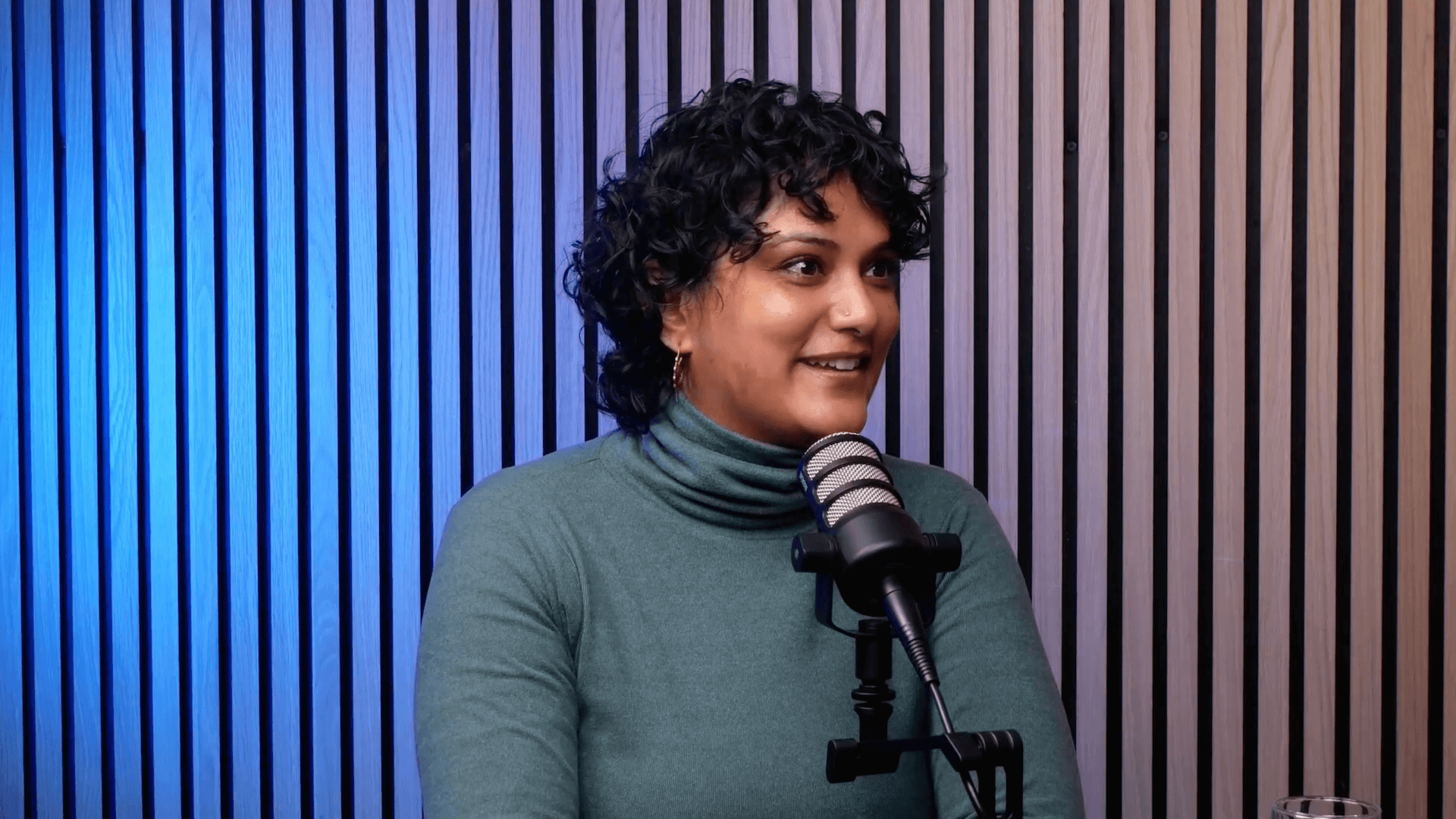
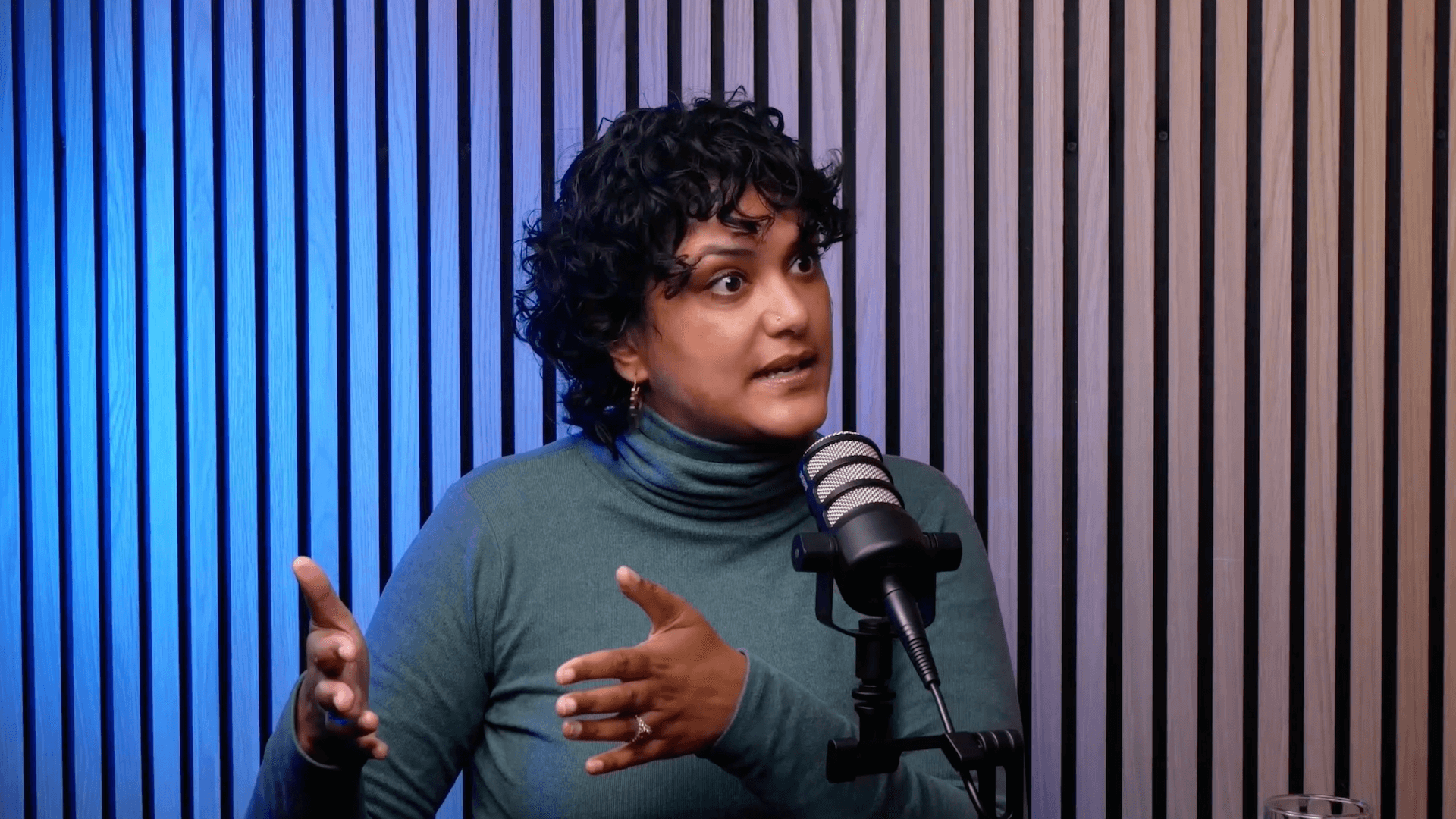
- Podcast Guest: Gillian Fernandez
- Podcast Host: Laura Duggan
In this episode of The Right Therapist, couples counsellor Gillian Fernandez explores why relationships so often feel unsafe, confusing, or lonely — even when there is love present. Drawing on attachment theory, somatic therapy, and systems thinking, Gillian explains how couples often get stuck not because of communication skills, but because of unspoken attachment needs, nervous system responses, and unresolved relational history.
The conversation unpacks how childhood experiences, trauma, and attachment patterns shape adult intimacy, including why conflict escalates, why people move into caretaking roles, and how partners can lose themselves in relationships while trying to keep connection intact. Gillian and Laura explore themes of regulation versus reactivity, defensiveness as a sign of threat rather than intention, and how people often respond to past wounds rather than what is actually happening in the present moment.
They also discuss couples therapy as a contained space where partners can “borrow” the therapist’s regulated nervous system, slow conversations down, and stay with difficult emotions long enough for real repair to occur. Topics include parenting, neurodiversity, non-monogamy, emotional labour, power dynamics, and the ways relationships can become destabilised before they become more secure.
Listeners will come away with a clearer understanding of how couples therapy actually works, why safety and regulation matter more than techniques, and how developing self-awareness and differentiation allows people to engage in relationships with greater honesty, resilience, and connection — without abandoning themselves in the process.
Gillian Fernandes
Listen on
Talking Points
Acknowledgement & introduction
- 00:00 — Creating safety in the therapy room: borrowing regulation, space, and containment.
- 01:02 — Introducing Gillian Fernandez and her work with couples, individuals, and diverse relationship structures.
- 01:45 — Acknowledgement of Country.
Gillian’s work & client demographics
- 02:08 — Working primarily with couples, alongside individual therapy when relationships stabilise.
- 02:52 — Relationship diversity: monogamous, non-monogamous, polyamorous, cross-cultural, and neurodiverse couples.
- 03:24 — The rise in clients exploring neurodivergence and identity within relationships.
Non-monogamy, attachment & identity
- 03:40 — Non-monogamy as renegotiation, transition, or sometimes a way of exiting relationships.
- 05:19 — Polyamory as sexual identity for some clients, rather than a relationship “strategy.”
- 06:58 — Attachment remains central, regardless of relationship structure.
Trauma & relationship patterns
- 07:48 — Trauma as something everyone brings into relationship.
- 08:42 — Multiple attachments as a way some nervous systems manage safety.
- 09:36 — The importance of understanding why a relationship structure feels safer.
What couples therapy really is
- 12:30 — Couples therapy as many things: communication, regulation, insight, separation, or repair.
- 13:42 — Moving beyond logistics into emotional presence.
- 14:26 — Helping couples see and step out of reactive patterns.
Live therapeutic exploration
- 15:29 — Laura introduces a real, present experience around safety and intimacy.
- 17:25 — Independence as protection from vulnerability.
- 19:41 — Locating sadness in the body.
Regulation, parts & attachment
- 20:52 — How protective parts move systems back to safety quickly.
- 23:12 — Attachment anxiety and self-abandonment in relationship.
- 25:48 — Hyper-attunement to threat when attachment feels unsafe.
Motherhood, capacity & nervous system change
- 28:08 — How motherhood shifts regulation and self-trust.
- 32:45 — Increased capacity to notice anxiety without being overtaken by it.
- 34:30 — Why protective parts soften when trust in regulation grows.
Window of tolerance & vulnerability
- 36:09 — Vulnerable emotions appearing briefly, then retreating.
- 37:14 — Allowing parts to come forward without forcing exposure.
Therapist presence & burnout
- 39:22 — Internal boundaries and visualisation as protection for therapists.
- 41:10 — Staying present without absorbing client material.
What therapy actually does
- 44:30 — Therapy as curiosity, presence, and regulation.
- 46:02 — Why therapy destabilises relationships before improving them.
- 47:58 — Bringing hidden dynamics into awareness.
Caretaking, desire & differentiation
- 51:47 — Caretaking as a survival strategy that can erode intimacy.
- 54:12 — When caretaking is the relationship.
- 56:05 — Healing through new relational experiences.
Desire, power & consent
- 1:10:30 — Differentiation as essential to erotic energy.
- 1:24:36 — Unspoken power dynamics and loss of consent.
- 1:28:26 — Loneliness inside relationships.
Family of origin & commitment
- 1:32:08 — Why deeper commitment mirrors early attachment.
- 1:35:14 — Fear emerging as relationships become more secure.
Closing reflections
- 1:39:03 — Being witnessed as a core human need.
- 1:41:00 — Subscribe and download the Source app to find a therapist who truly fits.
Transcript
- 00:00 – Opening
Laura: Some therapists describe that when clients come in, they’re borrowing the therapist’s regulated nervous system for a bit. Is that what it feels like with couples?
Gillian: Yeah, I think so. And they’re borrowing the room as well — physically borrowing the space to create safety while talking about things that feel unsafe. This isn’t home. You don’t have to pick up the kids. You don’t have to rush. You can just be here, feel what’s happening in your body, and sit with really difficult moments in an environment that’s stable.
Laura: And an environment that’s so held and contained by the therapist and the therapy that both people can stay in dialogue, be accountable, and be real.
Gillian: Yeah. They keep getting invited to show up. To use the time. Use the space. Use the opportunity for change.
- 01:02 – Introduction
Laura: Today’s guest is Gillian Fernandez, a counsellor specialising in couples and relationship therapy. Gillian holds a Master’s in Counselling and works with individuals and couples navigating emotional connection, de-escalating conflict, and building relational satisfaction across monogamous and polyamorous relationships.
Her work draws from Emotionally Focused Therapy, attachment theory, Gottman Method, somatic therapy, neuroscience, and a systems lens to create deeply personalised relational strategies.
In this conversation, we explore what really happens in the therapy room — how relationships heal, destabilise, and sometimes transform entirely.
You’re listening to The Right Therapist, where we demystify therapy.
We begin by acknowledging the Traditional Custodians of the land on which we live and work. We pay our respects to Elders past and present and extend that respect to all Aboriginal and Torres Strait Islander peoples listening today.
Welcome, Gillian.
Gillian: Thanks, Laura. I’m really happy to be here.
- 02:08 – Gillian’s Work & Client Demographics
Gillian: I run a private practice where I primarily work with couples and relationships, though I also see individuals — sometimes people come as a couple and then continue individually once things settle.
I tend to attract clients under about 50, though I do love working with older couples as well. There’s a lot of intersectionality in my work — sexuality fluidity, monogamous and non-monogamous structures, polyamorous relationships, cross-cultural couples, and a growing number of neurodiverse clients.
That includes relationships where one partner is neurodivergent and the other neurotypical, or both neurodivergent. There’s been a big increase in people identifying and exploring that recently.
- 03:40 – Non-Monogamy & Attachment
Laura: In non-monogamous relationships, are there unique challenges people face?
Gillian: This always feels like a risky question — I’m a few sentences away from offending someone — but I’ll be honest.
Sometimes non-monogamy is a way of exiting a relationship, and it just speeds things up. Sometimes it’s been working for years, and then a new life phase means it stops working and needs renegotiation.
At its core, though, it’s still about attachment. It’s not about “my body, my choice” — it’s about how people stay securely tethered to one another while also expressing autonomy, desire, and connection beyond the primary relationship.
- 05:19 – Polyamory as Identity
Gillian: I’ve been educated by clients who experience polyamory as part of their sexual identity. For them, managing multiple relationships isn’t internally hard — what’s hard is living in a society built around monogamy.
Banking systems, housing, social norms — everything assumes two people. Internally, though, for some people, polyamory is simply how they’re wired.
- 06:58 – Trauma & Relationship Structures
Laura: Do you think trauma informs people being drawn to polyamory?
Gillian: Trauma informs everything. That doesn’t mean polyamory is wrong. It means it’s important to know why you’re drawn to it.
If someone had early attachment disruptions, being attached to multiple people might feel safer — but knowing that, owning it, and working with it is what matters. No one enters any relationship without trauma.
- 12:30 – What Couples Therapy Really Is
Gillian: Couples therapy isn’t one thing. Sometimes it’s helping people have a conversation that goes beyond logistics. Sometimes it’s helping them listen without defending or dismissing.
Sometimes it’s helping them see their patterns and step out of reactivity. Sometimes it’s helping them separate. Sometimes it’s helping them feel safe in the intimacy they actually crave.
It depends entirely on where people are emotionally and what they’re carrying.
- 15:29 – Live Therapy Segment Begins
Laura: This isn’t a regular therapy session, but I want to bring something real.
I find it very easy to be single. I always have. But there’s a part of me that wants to love and be loved — and I haven’t really had space to think about that for years.
Those two parts feel opposed.
- 17:25 – Vulnerability & Safety
Laura: The part of me that loves being single feels safest. And I feel sad saying that.
I think it’s because relationships activate vulnerability — and vulnerability feels dangerous.
- 19:41 – Embodied Awareness
Gillian: Where does that sadness live in your body?
Laura: Deep in my chest — behind my heart.
- 20:52 – Regulation & Parts
Gillian: It sounds like your system moves quickly back to safety.
That independent part protects you from the sadness of wanting connection and fearing what happens to you in relationship.
- 23:12 – Attachment & Self-Abandonment
Laura: In relationships, I abandon myself. I become hyper-attuned to signs the attachment isn’t safe. That anxiety takes over.
- 28:08 – Integration & Motherhood
Gillian: Motherhood changes things. You can’t lose yourself the way you once did.
Your nervous system now has more regulation capacity than before — you’ve already learned how to come back from dysregulation.
- 32:45 – Regulation as Capacity
Gillian: If anxiety shows up now, you have more tools to notice it and return to yourself.
That’s why the independent part trusts you more than it used to.
- 36:09 – Window of Tolerance
Laura: It’s interesting how sadness appears and disappears so quickly.
Gillian: That’s okay. Vulnerable parts don’t like the spotlight. They come back when they feel safe.
- 39:22 – Therapist Presence & Burnout
Laura: How do you stay present with clients without burning out?
-
Gillian: I use internal boundaries. Visualisations. I remind younger parts of me that I’ve got this.
That allows me to stay fully present without taking things home.
- 44:30 – What Therapy Actually Is
Gillian: Therapy is showing up — physically and emotionally — with curiosity and openness.
It’s regulation. Reflection. Staying with what’s real long enough for something new to emerge.
- 46:02 – Why Therapy Destabilises Relationships
Gillian: Therapy destabilises relationships because it disrupts how they stay functional.
It brings the unsaid into the room. The invisible dynamics. The caretaking. The avoidance.
Things get worse before they get better because you’re finally washing the dirty laundry.
- 51:47 – Caretaking Dynamics
Gillian: Caretaking feels loving, but it kills differentiation.
When caretaking is removed, some relationships don’t survive — because caretaking was the relationship.
- 56:05 – Healing in Relationship
Gillian: So much healing happens in relationship. New experiences literally reshape neural pathways.
Being loved differently rewrites attachment.
- 1:00:46 – The Privilege of the Work
Gillian: I love that people pay me to challenge them — respectfully. To hold a container where hard truths can be explored safely.
That’s a privilege.
- 1:06:24 – Do All Couples Need Therapy?
Gillian: Some couples are genuinely okay. They reinvent their relationship with each life phase.
Those couples rarely need therapy.
- 1:10:30 – Differentiation & Desire
Gillian: Desire thrives on differentiation. On separation and reunion.
Too much togetherness — especially post-COVID — kills erotic energy.
- 1:24:36 – Power & Consent
Gillian: Unspoken dynamics create power imbalances.
If one person’s needs always trump the other’s, intimacy dies.
Consent requires transparency.
- 1:28:26 – Loneliness in Relationships
Gillian: Some of the loneliest people I meet are in relationships.
They’ve never experienced being truly known.
- 1:32:08 – Family of Origin
Gillian: The more committed a relationship becomes, the more it mirrors childhood attachment.
That’s why commitment can feel terrifying.
- 1:39:03 – Closing Reflections
Laura: There’s something profoundly human about being witnessed.
Gillian: That’s the work. Staying. Listening. Regulating. Being real.
- 1:41:00 – Call to Action
Laura: If this conversation resonated with you, hit subscribe and click the link below to download the Source app. It’s free to get started and helps you find a therapist who truly fits — faster.
Resources
No resources available.
Contact the therapist

Gillian Fernandes