
Rage, Regulation & Reclaiming Wholeness: Somatic Therapy
- Podcast Guest: Fiona Bell
- Podcast Host: Laura
In this episode of The Right Therapist, Laura is joined by Fiona Bell, a somatic therapist with over 30 years’ experience integrating somatic experiencing, Gestalt psychotherapy, polyvagal theory, dream work, and creative arts therapy.
Together, they explore how symptoms such as anxiety, chronic pain, rage, and fatigue are often intelligent adaptations of the nervous system, rather than signs that something is wrong. Fiona reframes emotional and physical symptoms as protective responses — ways the body holds and manages bound energy when safety has been compromised.
The conversation challenges the idea that anger should be calmed, bypassed, or eliminated. Fiona describes rage as life force — a source of boundary, protection, and vitality when integrated, and a source of anxiety or self-attack when suppressed. Regulation, she explains, doesn’t come from forcing calm, but from working within capacity and creating small, relational moments of safety over time.
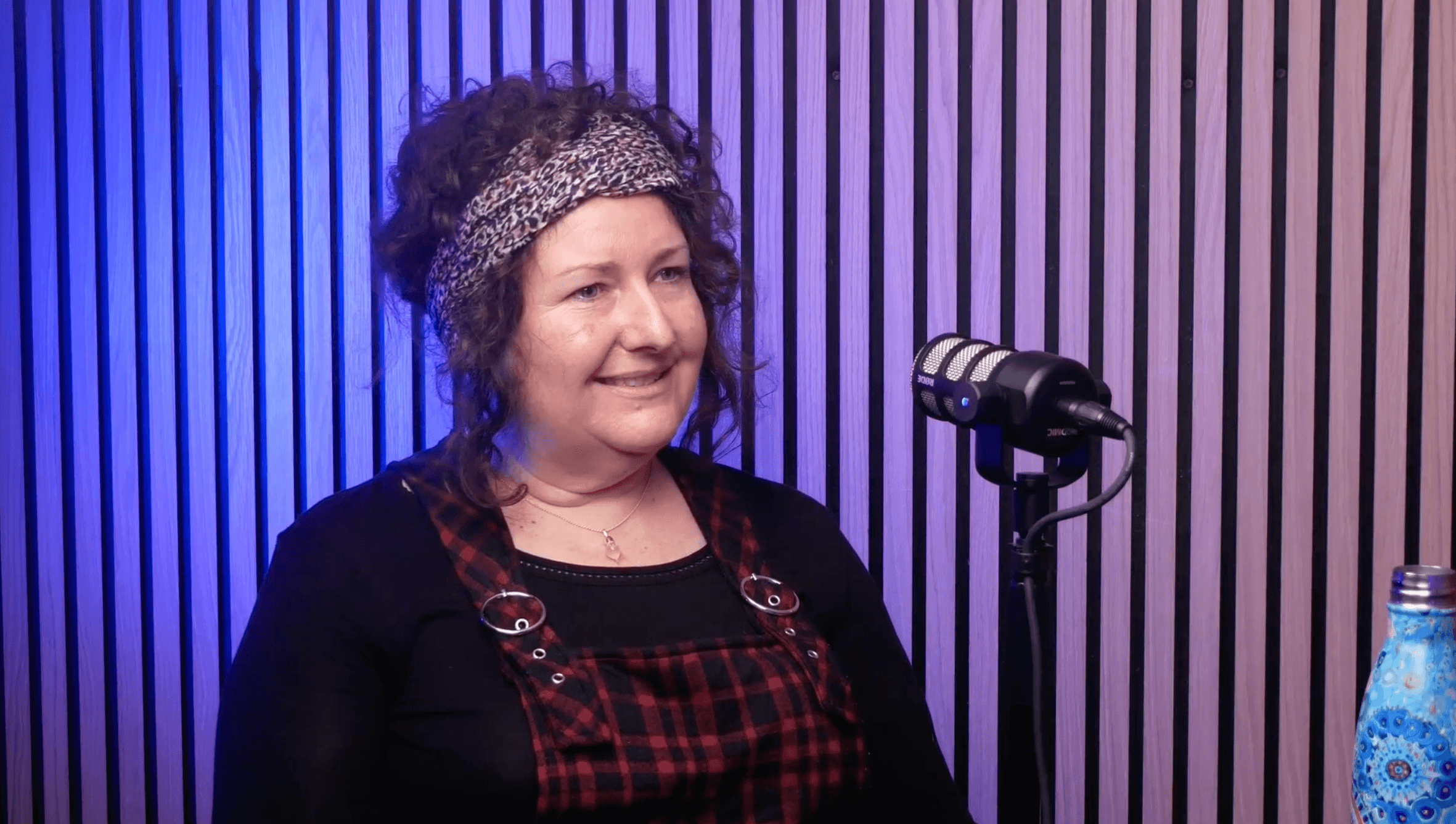
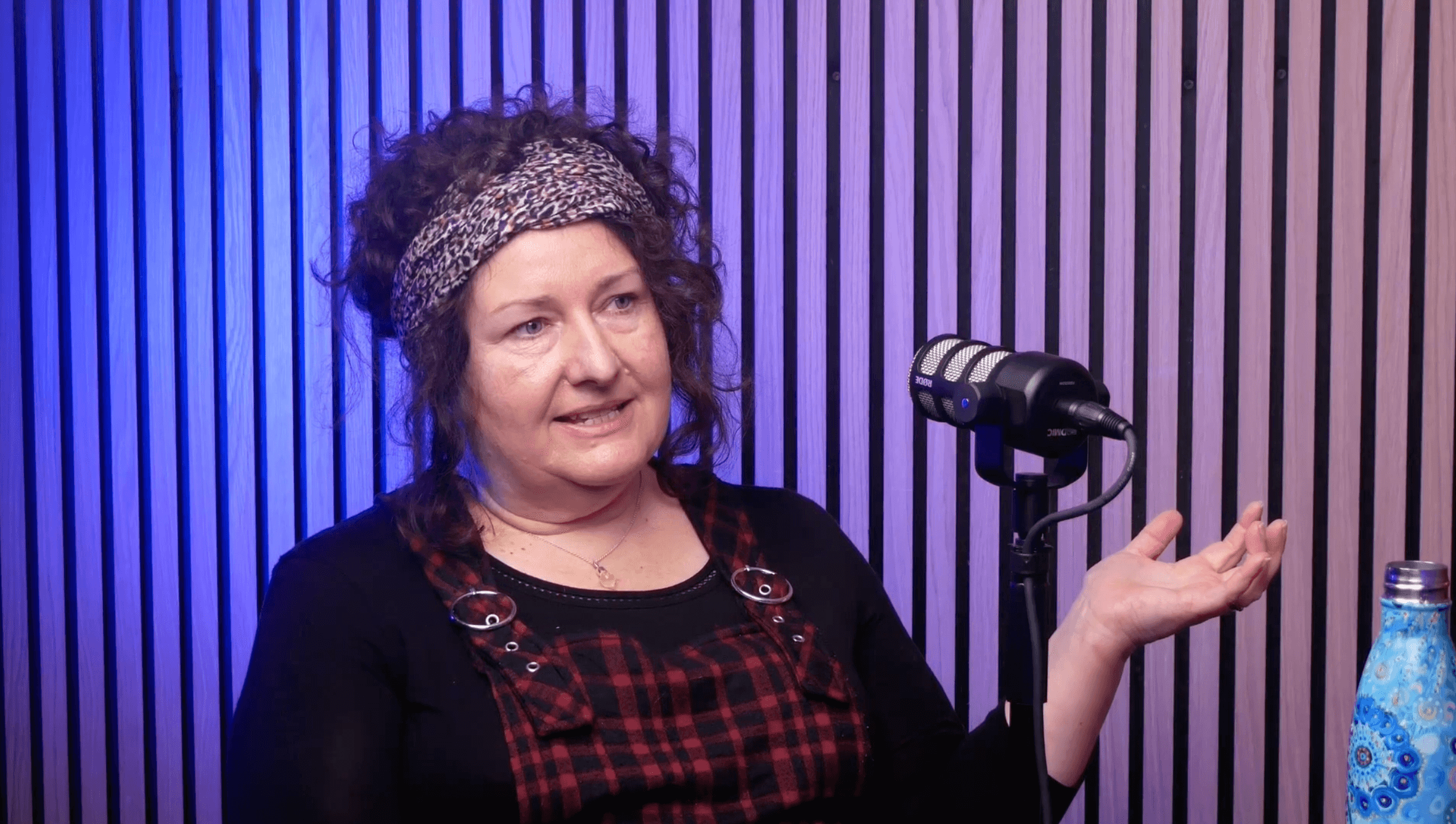
A live somatic therapy segment demonstrates how slowing down, tracking sensation, and allowing movement can lead to increased clarity, aliveness, and presence — without overwhelming the system. The episode also explores co-regulation, dream work, the importance of therapists doing their own inner work, and why being with another human can be one of the most powerful healing interventions.
This episode offers a compassionate, embodied approach to healing — one that honours the nervous system, welcomes anger, and supports wholeness through presence and relationship.
Fiona Bell
Listen on
Talking Points
- 00:00 – Anger, Rage & What Happens When It’s Suppressed: Laura reflects on how unexpressed anger doesn’t disappear — it turns inward, often becoming self-attack, collapse, or anxiety. Fiona introduces the idea that rage is energy that must be met, not erased.
- 01:10 – Meet Fiona Bell: Fiona shares her background as a somatic therapist with over 30 years’ experience, integrating Somatic Experiencing, Gestalt psychotherapy, polyvagal theory, dream work, and creative arts.
- 03:30 – Healing Begins with Connection: Fiona explains how much of her work begins with simply offering safe, attuned connection — often the first experience of being met as oneself.
- 05:45 – The Nervous System as the Baseline: An introduction to nervous system–informed therapy and the influence of Stephen Porges. Fiona describes how physiology drives emotional, cognitive, and psychological states.
- 07:40 – Physical Symptoms as Adaptive Responses: IBS, chronic pain, fatigue, panic, and anxiety are reframed as intelligent survival strategies — ways the body protects the heart and nervous system under prolonged stress.
- 10:00 – Stress vs Chronic Dysregulation: The difference between everyday stress and nervous systems that remain locked in threat, responding to the present as if the past is still happening.
- 12:40 – Trauma as Gold: Fiona introduces the Kintsugi metaphor: how painful or overwhelming experiences can become sources of depth, strength, and meaning when integrated.
- 16:10 – There Is Nothing Wrong With You: Why therapy is not about fixing people, but about expanding choice, capacity, and ways of being in the world.
- 19:50 – “Ease Is the Therapy”: Fiona describes working within capacity, creating small islands of safety rather than overwhelming the system by reliving trauma.
- 22:30 – Co-Regulation & the Therapist’s Nervous System: Why the therapist’s own regulation matters, and how nervous systems communicate below conscious awareness.
- 25:00 – Healing Beyond the Individual: How regulation ripples into relationships, family systems, ancestry, and future generations.
- 28:00 – Why Therapists Must Do Their Own Work: Fiona reflects on how personal therapy expands a therapist’s capacity to be with grief, rage, shame, and trauma.
- 33:00 – Relief, Tears & Being Seen: The power of being met without judgement, and how tears can release held nervous system energy.
- 34:50 – Dream Work as a Path to Wholeness: Dreams as compassionate messengers that support integration of disowned or unrecognised parts of the self.
- 39:10 – Trauma Dreams & Restoring Agency: Using dreams, imagination, and allies to gently renegotiate fear and restore a sense of power.
- 42:50 – Rage as Life Force: Rage reframed as protection, boundary, and vitality — not something to suppress or fear.
- 47:10 – Anxiety & Anger: How anxiety often decreases when anger is reclaimed and integrated as a supportive force.
- 50:50 – The Cost of Being “Civilised”: How compliance, niceness, and suppression disconnect us from instinct, power, and aliveness.
- 56:00 – Live Somatic Therapy Segment Begins: Fiona guides Laura through an embodied exploration of anger using movement, gesture, and awareness.
- 01:05:00 – Taking Up Space Without Diminishing Others: A nervous-system-level shift: discovering that being more fully oneself deepens connection rather than reducing it.
- 01:13:00 – Being With as the Most Powerful Intervention: Research and lived experience showing that presence and attuned connection soothe the nervous system more than technique.
- 01:16:00 – Closing Reflection: Healing as remembering wholeness, reclaiming disowned parts, and allowing the body’s innate wisdom to lead.
Transcript
- 00:00 – Opening
Laura:
When you were talking earlier about embracing your own anger — your own rage — and really owning that and allowing it, I noticed something shift in you. You were moving, your voice sounded different, and there was energy there. And what really struck me is that anger doesn’t actually go away when we try to calm it down or meditate it out.
If we tell ourselves we shouldn’t feel angry, or try to override it with positivity or mindfulness, it doesn’t disappear. It just doesn’t get expressed. And then it turns inward. It becomes an attack on ourselves — collapsing into “I couldn’t do that,” or “I shouldn’t feel this,” or “there’s something wrong with me.”
Today I’m joined by Fiona Bell, a somatic therapist with over 30 years of experience. Fiona integrates somatic experiencing, Gestalt psychotherapy, polyvagal theory, dream work, and creative arts therapy. In this conversation, we explore how simply being with another human being can be one of the most powerful interventions in therapy, and how working with the nervous system — rather than trying to fix or override it — creates real change.
Welcome, Fiona.
Fiona:
Thank you, Laura. It’s really lovely to be here.
- 01:10 – Fiona’s Path Into Therapy
Laura:
Can you tell us a little bit about your work — who you work with and the kind of therapy that you do?
Fiona:
I probably come to this work through my own journey. It was my own therapy — particularly somatic work, dream work, and Gestalt — that really brought me to a place where I could make sense of myself and my life. That experience was deeply meaningful for me, and it’s what drew me into this field.
I tend to blend and combine a range of modalities, but mostly I meet people exactly where they are. A lot of my baseline work is simply offering connection — allowing someone to come as themselves, sometimes for the first time, and to experience being with another person in a sense of relative safety.
- 03:30 – Nervous System as the Baseline
Fiona:
Much of my work is informed by nervous system theory, particularly the work of Stephen Porges, who I think is extraordinary. I work a lot with nervous system regulation because people often come presenting with stress, anxiety, fear, rage, or physical conditions — things like IBS, fibromyalgia, panic attacks, chronic pain.
What my training and experience have shown me is that our physiological conditions, emotional states, thought patterns, and even our spiritual experiences are all interconnected. It’s all one system. Often it’s the physiology — the nervous system state — that’s driving the story, rather than the other way around.
- 05:45 – Symptoms as Protection
Fiona:
When a nervous system is working very hard to protect us, energy gets bound up in the body. That can show up as pain, digestive issues, fatigue, or other symptoms.
Paradoxically, those symptoms are often the body’s way of protecting us — particularly protecting the heart. When the heart is under prolonged stress, the physiology steps in to regulate survival. The energy has to go somewhere, and it often goes into symptoms.
So rather than seeing symptoms as pathology, I see them as intelligent adaptations. They’re the system doing its very best to keep us alive.
- 07:40 – Stress vs Chronic Dysregulation
Laura:
What’s the difference between everyday stress and something that becomes chronic or stuck?
Fiona:
There’s a kind of stress that’s contextual — like doing a podcast — where there’s still a sense of safety. But then there’s another kind of stress that arrives out of the blue, where someone suddenly feels overwhelmed and doesn’t know why.
For many people I work with, this becomes a chronic state. They say, “I don’t know safety. This is all I’ve ever known.” Their nervous system is responding to the present moment as if the past is still happening. It hasn’t been able to separate then from now.
- 12:40 – Trauma as Gold
Fiona:
What I notice again and again is that the experiences people most wish hadn’t happened are often what form their deepest strengths.
I often use the Japanese Kintsugi metaphor — broken bowls repaired with gold. The cracks don’t disappear. They become the source of value. Our painful experiences, when integrated, become our richness. They form us into who we are.
- 16:10 – “There Is Nothing Wrong With You”
Fiona:
People often come to therapy believing there is something fundamentally wrong with them. One of the most important things I offer is the experience that there is nothing wrong at the core.
There may be things someone wants to change, or ways they want to feel differently, but that’s very different from being broken.
- 19:50 – Ease Is the Therapy
Fiona:
A client once said to me, “Ease is the therapy.” And that really stayed with me.
We don’t overwhelm the system. We work within capacity. We create small islands of safety — moments of regulation — and over time those islands connect. Healing happens gently, in relationship, in the present moment.
- 22:30 – Co-Regulation
Fiona:
Our nervous systems are always communicating. When I’m regulated and present, that offers co-regulation. That’s often far more powerful than any strategy or technique. Healing happens in relationship.
- 28:00 – Why Therapists Must Do Their Own Work
Laura:
How important is it that therapists do their own work?
Fiona:
It’s foundational. It expands our capacity to be with grief, rage, shame, and terror without becoming overwhelmed. Clients can feel that. Our systems know when someone can truly hold us.
- 34:50 – Dream Work
Fiona:
Dreams are one of my great passions. I think of dreams as a best friend — utterly on our side. Even frightening dreams come in service of health and wholeness.
Every dream contains some ground of regulation. We work symbolically and somatically, allowing disowned parts — including strength, power, and rage — to be integrated.
- 42:50 – Rage as Life Force
Fiona:
Rage is life force. When it’s suppressed, it turns inward as anxiety or self-attack. When it’s integrated, it becomes protection, boundary, and vitality.
Often when people reclaim their anger, their anxiety decreases because they know they can protect themselves.
- 56:00 – Live Therapy Segment
Fiona:
Would it be okay if we slow this down a little and notice what’s happening in your body right now?
Laura:
Yeah… I notice a gesture — it’s like this movement behind me.
Fiona:
Let’s stay with that. Just slow it right down. Notice what happens when you repeat that movement, without trying to do anything with it.
Laura:
There’s a brightness. A sense of aliveness. My chest opens.
Fiona:
Yes… just track that. Notice what it’s like to be with the world from that place.
(extended somatic exploration continues, including fear of being “too much,” taking up space, relational contact, clarity, regulation, and mutual presence)
- 01:05:00 – Taking Up Space
Fiona:
When you inhabit yourself more fully, it doesn’t diminish the other. It deepens connection. I can see you more clearly when you’re more you.
- 01:13:00 – Being With Heals
Fiona:
Research shows that simply being with another human — nervous system to nervous system — calms the amygdala. Often the most healing moments are silent. Presence itself does the work.
- 01:16:00 – Closing
Laura:
Thank you, Fiona. That felt deeply embodied and incredibly generous.
If this conversation resonated with you, hit subscribe and click the link below to download the Source app. It’s free to get started and helps you find a therapist who truly fits — faster.
Resources
No resources available.
Contact the therapist
Fiona Bell