
Rupture and Repair in Therapy
- Podcast Guest: Louise O’Dwyer
- Podcast Host: Laura Duggan
In this episode of The Right Therapist, Gestalt psychotherapist Louise explores how meaningful change happens not by fixing ourselves, but by becoming more fully who we already are. Drawing on Gestalt therapy, Louise explains how awareness, embodiment, and relational support create the conditions for healing anxiety, depression, relationship difficulties, and long-standing developmental wounds.
The conversation unpacks the paradoxical theory of change, showing how many behaviours — such as people-pleasing, self-criticism, or over-functioning — once made sense as creative adjustments for staying in contact and surviving emotionally. Louise and Laura explore why rushing to “fix” ourselves often creates resistance, and how therapy supports insight through lived experience rather than advice.
They discuss key Gestalt concepts including the contact boundary, here-and-now awareness, and how unexamined “shoulds” can become internalised judgement. Louise also explains empty chair work, parts of self, and why embodied awareness provides insight beyond thinking alone. Themes of attachment, rupture and repair, and relational safety are explored throughout, including how repair in the therapy relationship can be deeply corrective.
The episode includes a live Gestalt therapy segment, offering a rare window into how therapy supports integration, compassion, and choice. Listeners will come away with a grounded understanding of Gestalt psychotherapy, relational healing, and why awareness — supported by relationship — is what allows real change to emerge.
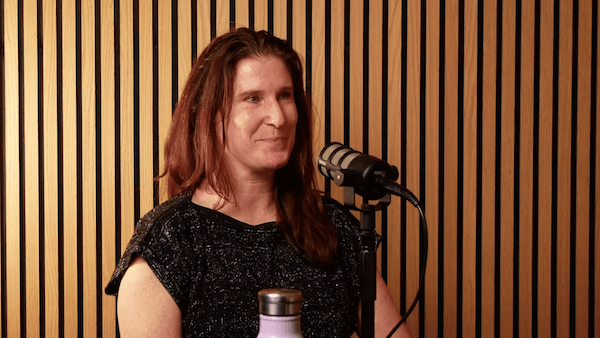
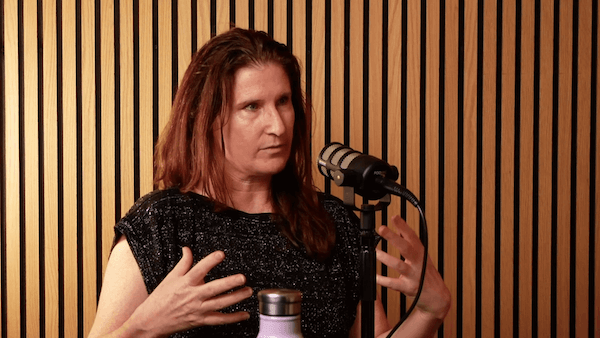
Louise O’Dwyer
Listen on
Talking Points
Acknowledgement & intro
- 00:00 — Why change happens through becoming more of who we already are (the “battle drops” when awareness grows).
- 00:45 — Introducing Louise: supportive, nurturing therapy for anxiety, depression, relationships, self-esteem, and life complexity.
- 01:05 — Acknowledgement of Country.
Louise’s work & what therapy can offer
- 01:19 — Louise describes the work as intimate, rich, difficult, and deeply rewarding.
- 02:08 — Many clients carry developmental wounds; therapy creates space to feel what wasn’t possible back then.
- 03:01 — “I don’t want to feel those feelings”: readiness, pacing, and the tightrope between support and challenge.
- 04:14 — Therapy often surprises people: stepping into the “abyss” isn’t always as overwhelming as feared.
Why people come to therapy (and what Gestalt does differently)
- 05:00 — Many people come when they don’t know what else to do; fear it’ll waste time/money or repeat past bad therapy.
- 05:40 — Gestalt: moving away from pathologising into “what makes sense about how you got here?”
- 06:22 — How Gestalt supports understanding without forcing a prescriptive model.
Gestalt theory of change (paradoxical theory)
- 06:48 — Change is central: crisis, grief, and the wish to be different.
- 07:11 — Early work: how current patterns make sense and how they once helped (creative adjustment).
- 08:10 — Example: people-pleasing as a survival strategy for staying in contact.
- 09:05 — Therapy aims for client “aha” moments; unlearning the rush to “fix”.
- 10:30 — If the therapist sides too hard with the “change” part, the other part resists.
Contact boundary & relational work
- 14:18 — Being with “what is” becomes possible through support and relationship.
- 15:05 — “Contact boundary”: where I end and you begin; a full-bodied awareness of how a client makes contact.
- 16:27 — How contact patterns in session often reflect contact patterns in life.
“Shoulds”, judgement, and digesting what’s been swallowed
- 16:57 — The “should” as judgement; something swallowed without being digested.
- 17:31 — Therapy as digesting what’s true for you and “spitting out” what isn’t.
Empty chair work & embodiment
- 18:27 — Parts of self, polarities, and experimentation.
- 19:19 — What empty chair is (and isn’t): not theatrics; it’s embodied inquiry.
- 20:00 — Grounding in breath, body, senses.
- 21:04 — Why embodiment gives insight beyond thinking.
- 22:31 — Internal conflict example: conquer-the-world part vs caramel-milkshake-and-canoe part.
- 23:12 — Spatial setup: placing the chair in relation to the self.
- 24:05 — How parts speak with surprising clarity once the body is engaged.
- 25:55 — Integration: moving from tug-of-war to a middle path that frees energy.
Here-and-now vs there-and-then
- 29:44 — Old adaptations can run in the present: “acting as if here-and-now is there-and-then.”
- 31:17 — Presence as a key outcome; a nod towards Buddhism (relationship to life as it is).
- 32:15 — Hypervigilance lens example: growing up in anger can shape perception and energy use.
- 32:42 — Relationships amplify “there-and-then” projections (attachment scripts).
Rupture and repair in therapy
- 34:29 — Rupture/repair: conflict as a healing opportunity when there’s safety.
- 35:19 — Being “missed” (misunderstood) by the therapist as a classic rupture.
- 36:01 — Repair: naming it, holding it, owning it—can be cathartic and corrective.
- 37:37 — What happens in the therapist: self-consciousness, humility, and using it to grow.
Boundaries, disclosure, and safety
- 38:21 — Why the therapeutic relationship is intentionally “lopsided” (client-centred).
- 39:14 — Too much reciprocity makes clients edit themselves.
- 40:00 — Boundaries create safety; “horizontal” relating can make clients feel responsible for the therapist.
- 43:25 — Ethics: supervision, notes, confidentiality, interrogating bias and privilege.
Why therapists need their own therapy
- 45:00 — Own therapy builds capacity, prevents bias, supports presence.
- 46:15 — Sitting with deep wounds: showing up without “mastery”.
- 47:12 — “Abyss up to your knees”: feelings become holdable with grounding/support.
Being seen vs being “high esteem”
- 53:21 — “Are you analysing me?”; over time therapists analyse less—people make sense.
- 56:51 — Gestalt training is experiential: group process, vulnerability, practising early and often.
- 59:51 — “Learning how to not know”: cultivating uncertainty + presence.
Who Gestalt psychotherapy suits
- 1:00:52 — For those wanting relational, medium/longer-term work: integration, attachment wounds, grief/loss.
- 1:02:03 — Not the right fit for presentations requiring intensive psychiatric/diagnostic pathways (she flags this carefully).
Demo therapy segment (mini-session)
- 1:12:41 — Role shift: host becomes “client”, Louise becomes therapist.
- 1:13:11 — Presenting issue: “I should be more professional/organised.”
- 1:13:48 — Body cue: “bad taste”, stuckness, embarrassment.
- 1:14:55 — Fear underneath: letting people down / being judged / being exposed as “not real”.
- 1:16:32 — Creativity as true-self expression; relief in “not knowing”.
- 1:18:41 — The protective function: avoiding shame; shame becoming “a sad friend who needs a cuddle.”
- 1:20:59 — Year 7 memory emerges: disorganisation linked to family instability (parents losing the farm).
- 1:28:00 — New compassion: seeing herself at school amongst peers; tenderness and integration.
Closing quote + CTA
- 1:33:22 — Maria Popova quote (Bird by Bird cards): true shelter is being wholly seen and known.
- 1:35:09 — CTA: subscribe + download the Source app; find a therapist who fits.
Transcript
Opening
- [00:00] Host:
Because, of course, people come to therapy needing help. And I feel like that comes back to what we’re talking about — change. That change happens when we become more what and who we already are. We bring understanding and awareness to that, and in becoming more of what and who we are, the battle drops — that internal struggle that’s so exhausting. - [00:26] Host:
Today I’m joined by Louise, a deeply attuned and compassionate Gestalt therapist whose work is grounded in creating a supportive, nurturing environment for those navigating anxiety, depression, relationship struggles, and the many complexities that come with being human. Louise is passionate about helping people reconnect with their own natural intelligence — that deep, intuitive part of us that allows us to heal when given the space, respect, and presence it needs. Her approach honours this wisdom, creating a non-judgemental space for clients to deepen awareness, grow self-esteem, and step into the lives they want to live. - [01:00] Host:
You’re listening to The Right Therapist, where we demystify therapy. - [01:05] Host:
We’d like to begin by acknowledging the traditional custodians of the land on which we live and work. We pay our respects to Elders past and present, and extend that respect to all Aboriginal and Torres Strait Islander peoples listening today.
Louise’s work
- [01:19] Louise:
Thank you. Hi. Thanks for joining us. It’s good to be here.
My work is intimate and rich and difficult and really rewarding. I’m always surprised by the regard I have for my clients — the way they live in my mind and heart between sessions. - [01:53] Louise:
The people who find me often have something developmental going on. There’s usually a wound there — something about the way they grew up, with one or both parents. Supporting them to unpack that, and to feel things that weren’t possible to feel at the time, is a big part of the work. - [02:16] Louise:
The really rewarding part is watching people move back into those feelings, embody them, and resolve them to whatever degree is possible. It’s an honour to be that warm presence alongside them. It’s a mystery sometimes how long it takes or how it works — but it’s about human presence.
“I don’t want to feel those feelings”
- [03:01] Host:
What would you say to someone who thinks, “I don’t want to go and feel those feelings”? - [03:14] Louise:
I really get that. And I think you do need to be ready. It’s an important discernment — whether you need to go there now, or whether you need more time not to. Often it comes down to how much pain you’re in. - [03:57] Louise:
Good therapy isn’t about feeling everything all at once. So much of my work is about attuning to what the person in front of me actually has capacity for. It’s a creative process — walking a tightrope between support and challenge. - [04:14] Louise:
People are often surprised. As Nick Cave says, you step into the abyss and find it only comes up to your knees. It can be a relief.
Why people come / what Gestalt offers
- [04:49] Host:
A lot of people come to therapy not because they feel like they have a choice, but because they don’t know what else to do. - [05:00] Louise:
Yes. That first session is often full of anxiety. Is this going to work? Is this a waste of time and money? People may have tried other things that felt like walls — or they’ve felt pathologised. - [05:40] Louise:
Gestalt is about meeting what makes sense about what’s happening. How did you get here? What’s the logic in this?
Gestalt and change
- [06:22] Host:
Can you say a bit more about how Gestalt supports that? - [06:48] Louise:
Change is central. People come wanting change, but early work is about understanding how someone got where they are — how what they’re doing has been supporting them. - [07:24] Louise:
We call it a creative adjustment. For example, if no one attuned to you growing up, you might become a people-pleaser to stay in contact. Later, that drives you mad — but it once made sense. - [09:05] Louise:
The richest therapy happens when clients have their own “aha” moments. Training as a therapist involves unlearning the urge to fix. People say, “Just tell me what to do.” I can — but that’s my idea. I want to support you to find what you need. - [10:30] Louise:
If I side too much with the part that wants to change, the other part will resist.
Paradoxical theory of change
- [11:39] Host:
Can you say more about the Gestalt theory of change? - [11:48] Louise:
It’s called the paradoxical theory of change. We change when we become more of what we already are. Awareness brings grounding, choice, and presence. When we try to be something else, we reject parts of ourselves that are hard to feel. - [13:28] Louise:
Support strengthens people. With support comes awareness, flexibility, choice, and joy.
Contact boundary
- [14:18] Louise:
With support, you can stop running from what is. Gestalt is relational — we sit with it together. - [15:05] Host:
What do you mean by contact boundary? - [15:12] Louise:
It’s the space between where I end and where you begin. I sense with my whole body — eye contact, movement, how someone enters the room. How someone makes contact with me tells me how they make contact with the world and with themselves.
“Shoulds” and digestion
- [16:57] Louise:
It’s not about correcting. A “should” is often something swallowed whole from the environment. Therapy helps people digest what they want and spit out what they don’t.
Empty chair work
- [18:27] Louise:
We all have different selves. Empty chair work helps separate them. - [19:19] Host:
Can you explain how that works? - [19:41] Louise:
It’s not theatre — it’s an experiment. We slow down into the body: breath, feet on the ground. - [21:28] Louise:
The body knows. Clients might notice constriction in the chest and grounding elsewhere — two places at once. - [22:31] Louise:
One part might want to conquer the world, another to relax with a caramel milkshake. Letting them speak reduces the tug-of-war and brings integration.
Here-and-now vs there-and-then
- [29:44] Louise:
People act as if they’re in the here-and-now when they’re actually responding from the there-and-then. Awareness brings choice. - [31:17] Louise:
Presence is freeing. Gestalt touches Buddhism — it’s about our relationship to what is.
Rupture and repair
- [34:29] Louise:
Rupture and repair are important. If a client feels missed by me and can say that, it’s brave — and repair can be deeply healing. - [37:56] Louise:
As a therapist, it’s hard. We want to be good. Growth comes from turning up to the hard moments without making it about ourselves.
Ethics, supervision, therapist’s own therapy
- [43:40] Louise:
Ethics matter. Supervision, case notes, ongoing reflection — all to serve the client. - [45:00] Louise:
I can’t imagine being a therapist without my own therapy. Knowing the terrain matters.
Gestalt training
- [56:51] Host:
What is Gestalt training like? - [57:37] Louise:
It’s experiential. Group-based, vulnerable, deeply supported. You sit in the therapist chair, the client chair, and observe. - [59:51] Louise:
A big part of training is learning how to not know — cultivating uncertainty, presence, and attunement.
Who Gestalt suits
- [1:00:52] Louise:
People wanting relational support, who’ve felt unmet by tick-box approaches. Not suitable for presentations needing psychiatric pathways — but powerful for developmental and attachment work.
Mini-session demo (abridged labels retained)
- [1:12:41] Host:
I’m your client now. - [1:13:11] Host:
I should be better. More organised. It feels stuck — a bad taste. - [1:14:02] Louise:
What do you notice as you say that? - [1:18:56] Host:
Shame feels like a sad friend who needs a cuddle. - [1:24:45] Host:
My parents were losing everything — their farm. I felt lost. - [1:28:00] Host:
There’s tenderness. New compassion.
Closing
- [1:33:22] Louise:
“On the uncertain grounds of existence… true shelter is found not in high esteem, but in being wholly seen and known.” — Maria Popova - [1:35:09] Host:
If this resonated with you, subscribe and download the Source app to find a therapist who truly fits.
Resources
No resources available.
Contact the therapist

Louise O’Dwyer