
Integrative Psychotherapy, Embodied Healing & Neurodiversity
- Podcast Guest: Ange Cook
- Podcast Host: Laura Duggan
In this episode of The Right Therapist, Laura is joined by Ange Cook, an integrative psychotherapist whose work is grounded in curiosity, embodiment, and trauma-informed practice.
Together, they explore a powerful reframe: anxiety as a resource rather than something to eliminate. Ange describes anxiety as a signal from the nervous system — information about safety, capacity, and what may need attention or movement. Rather than aiming for constant regulation, therapy supports building capacity to move with discomfort and respond with discernment.
Through discussion and a live embodied therapy segment, the episode shows how curiosity — “I don’t know” — creates safety, reduces judgement, and allows new experiences to emerge beyond cognitive problem-solving. Attention is gently brought into the body, where anxiety shifts from constriction into clarity, focus, and aliveness.
The conversation also touches on integrative psychotherapy in practice, working in the client’s language, neurodivergence and unmasking, trauma-informed somatic work, post-cult recovery, and the impact of modern life and social media on anxiety.
This episode invites listeners to reflect on their own inner signals and ask: what is your language, and what is your body already telling you?
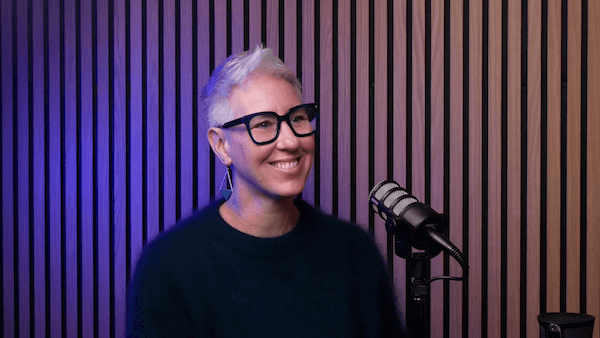
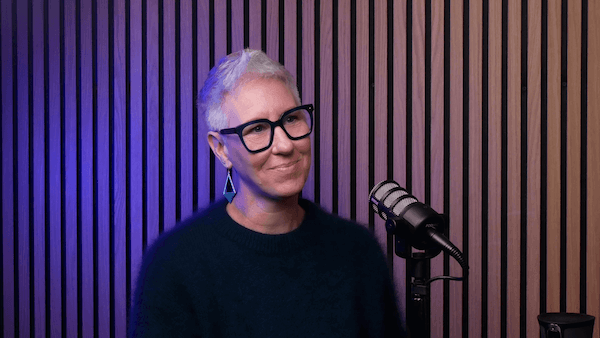
Ange Cook
Listen on
Talking Points
- 00:00 – Opening: Anxiety as a Resource
Ange reframes anxiety not as pathology, but as information — a signal from the nervous system that something is outside capacity. Anxiety becomes a signpost, not a problem to eliminate.
- 02:00 – Meet Ange Cook
Ange introduces herself as an integrative psychotherapist, working with adolescents and adults. She shares why therapy feels alive, relational, and deeply human — rather than draining or mechanical.
- 05:40 – Therapy as Aliveness, Not Exhaustion
A challenge to the common assumption that therapy is only heavy or taxing work. Ange speaks to vitality, curiosity, and the privilege of holding human stories collaboratively.
- 10:50 – Curiosity vs Inquiry
Curiosity as a therapeutic stance:
Not knowing, removing assumptions, leaning forward into “I wonder…” — and why curiosity invites safety rather than judgment.
- 15:30 – Live Therapy Segment Begins
Laura and Ange move into a real, unscripted therapy exchange, explicitly naming the difference between performance and presence, and the absence of a traditional intake or framing.
- 18:30 – Not Knowing & Nervous System Ambiguity
Laura explores uncertainty around work, control, and timelines. Anxiety appears as constriction — not yet understood, but felt.
- 22:00 – From Head to Body
A shift from cognitive problem-solving into somatic awareness.
As attention moves into the body, anxiety transforms from constriction into energy, force, and potential.
- 27:30 – Anxiety vs Power
What initially felt like anxiety reveals itself as sharpened focus and deployable energy — illustrating how bottom-up awareness changes meaning entirely.
- 31:00 – Bridging & Closing a Somatic Experience
Ange explains the importance of bridges in therapy — how clients enter and leave embodied states safely, especially in online work.
- 35:00 – The Language of the Client
Ange describes one of her core principles: therapy works best when conducted in the client’s language — body, metaphor, music, writing, drawing, movement, parts, or narrative.
- 41:00 – Therapy as a Place to Take Up Space
Why therapy is often the only place where clients — especially women — are invited to be fully centred, attended to, and prioritised without reciprocity.
- 46:30 – Embodiment & Safety
Ange explains why safety and stabilisation must precede deep body work, especially in trauma-informed practice.
- 50:00 – Neurodivergence & Unmasking
A nuanced discussion of working with neurodivergent clients:
Grief, sensory sensitivity, identity, and the shift from “I must adapt” to “the world must accommodate.”
- 55:30 – Cult Recovery & Identity
Ange shares her lived experience of leaving a fundamentalist religious cult and how this informs her work in post-cult recovery, identity rebuilding, and differentiation.
- 1:02:30 – Stuckness, States & the Body
“Stuck” as information, not failure.
Ange explores when movement is needed — and when being with stuckness itself creates change.
- 1:06:00 – Paradoxical Change & Dysregulation
Change happens at the edge of comfort, not by forcing regulation. Therapy becomes a place to practice dysregulation safely.
- 1:09:30 – Pleasure as a Somatic Anchor
Before entering distress, Angie helps clients build references for pleasure — touch, warmth, scent, connection — to support titration and nervous system resilience.
- 1:13:30 – Social Media & Anxiety
A candid discussion on how social media fragments attention, fuels comparison, and undermines regulation — and why reduction often leads to rapid improvements in self-esteem.
- 1:18:00 – Closing Reflection: Language, Song & Self
Ange returns to the idea of personal language — the song each person sings into the world — and therapy as a space to rediscover it.
- 1:19:30 – Call to Action
If this conversation resonated with you, subscribe and download the Source app to find a therapist who truly fits — faster.
Transcript
00:00 – Opening
- Laura: Can you give an example of what the resource of anxiety might be?
- Ange: Anxiety is telling you that you might not be feeling safe. It’s a signpost — that your body is experiencing a form of threat, that you’re outside of your capacity in the autonomic nervous system. We all have anxiety. We all have our ups and downs. Anxiety is a resource for everyone. When it moves outside of what our capacity is to hold it, to move with it, to understand it and work with it — that’s when dysregulation happens.
- Laura: And we so often override anxiety.
00:30 – The Goal Is Not Constant Regulation
- Laura: We override it — “I shouldn’t feel anxious” — and we just keep going. But actually, we need to be discerning. Sometimes anxiety tells us to stay, and sometimes it tells us this isn’t right and we need to move away. And the goal actually isn’t to be regulated all the time.
- Ange: I think that’s a bit of a dream. We don’t live in a world that’s structured for regulation. Anxiety and depression are completely understandable responses to the world today.
00:56 – Introduction
- Laura: I’m joined by Ange Cook, an integrative psychotherapist whose approach is trauma-informed and inclusive, welcoming diverse identities including LGBTQIA+ and neurodivergent individuals. In this episode, we explore what integrative therapy means in practice, the importance of working in the language of the client, and the role of the therapist in creating a safe, non-judgemental space. We’ll also explore existential themes, embodied experience, and how therapy is shaped by curiosity rather than certainty.
- You’re listening to The Right Therapist — where we demystify therapy.
- We’d like to begin by acknowledging the Traditional Custodians of the land on which we live and work. We pay our respects to Elders past and present, and extend that respect to all Aboriginal and Torres Strait Islander peoples listening today.
01:49 – Welcome
- Ange: Thank you. It’s good to be with you.
- Laura: Can you tell us a bit about you and your work?
01:56 – Ange’s Work & Aliveness
- Ange: My work is what I’m most passionate about. It feels incredibly alive, rich, and fulfilling. I’m an integrative psychotherapist, working across different modalities. I work with individuals and adolescents from about fourteen years old. It’s a privileged place to be.
- Laura: When you say your work is alive — what does that mean for you?
- Ange: Even as you ask that, I notice my body — there’s a tingling. It’s love. It’s deeply rewarding. I’m an incredibly curious human, and that curiosity is about what it is to be human: how we show up, how we relate, what challenges us, what makes us feel alive, and what gets in the way of thriving and hope. It’s a love for me. To be with people who are suffering, stuck, curious, exploring — it’s beautiful.
04:23 – Therapy Is Not Just “Heavy”
- Laura: That’s very different to what people imagine therapy to be like. People often say, “That must be so taxing.”
- Ange: It can be hard. Some stories are heartbreaking. We’re holders of story. But we hold them relationally, collaboratively. That can be energising. There’s vitality in it — even when it’s exhausting.
05:21 – Curiosity in Therapy
- Laura: You’ve mentioned curiosity a few times. Can you say more about its role?
- Ange: Curiosity removes assumption. It’s “I don’t know.” It’s leaning forward with wonder. Inquiry and curiosity both matter, but curiosity invites. It says, “I wonder what’s here. Want to come with me?” It creates space.
06:42 – Being Met Without Judgment
- Laura: Curiosity feels like the opposite of being told what’s wrong with you.
- Ange: Exactly. It leads with I wonder. It’s suggestive, but not certain. Curiosity brings things into the present: What’s it like right now? What do you notice in your body as you speak?
07:51 – Live Therapy Segment Setup
- Laura: I often say this isn’t a normal therapy session. We don’t have a therapeutic relationship. We’re in a different setting — cameras, microphones — and there’s awareness of what happens afterward. But it is a real segment of therapy.
- Ange: There’s no framing — we’re diving right in.
09:55 – Entering the Therapy Space
- Laura: The first thing I’m aware of is that it’s just nice to be here with you.
- Ange: I want to welcome you into the space between us — whatever can transpire in this relational field. What feels present?
10:31 – Ambiguity & Sensation
- Laura: I notice two parts — one still in podcast mode, and another relaxing into being here. I feel something in my chest and throat. I’m not sure if it’s excitement or uncertainty. Maybe both.
- Ange: Is it okay to be with the ambiguity?
12:02 – Not Knowing
- Laura: It’s nice to be in the not knowing.
- Ange: Where else in your life are you encountering not knowing?
12:23 – Work, Control & Uncertainty
- Laura: Work. Timelines. Depending on other people. Holding a vision without knowing how it will unfold. There’s nervousness in that.
- Ange: Does the not knowing steer you, or are you surrendered to it?
13:40 – Constriction & Control
- Laura: It steers me. I ask questions, want information, feel constricted. I even hold my breath.
- Ange: What is the not knowing asking of you? What’s its gift?
14:20 – Two Truths
- Laura: One part wants to trust the flow. Another wants control. They feel like polarities.
- Ange: They’re parallel truths. Flow doesn’t mean taking your hands off the wheel. I’m curious what happens if we attend to the body — where the constriction is — rather than solving it cognitively.
16:59 – Moving Into the Body
- Laura: When I drop down, I feel my heartbeat. It reminds me I’m alive. The constriction changes shape — it softens.
- Ange: Let’s breathe into it. Notice its qualities. Does it have a colour?
18:38 – From Anxiety to Power
- Laura: It’s silvery blue. Strong. Almost like a bullet — aerodynamic. There’s power there.
- Ange: Interesting metaphor. A bullet is something that aims.
21:13 – Deploying Energy
- Laura: The words “deploying” and “sharpening focus” come to mind. The uncertainty called me into this energy.
- Ange: How does this relate to not knowing?
22:52 – Trusting What’s Here
- Laura: I don’t know — and that’s okay. I’m connected to this energy. When clarity comes, I can deploy it. It’s very different from figuring things out in my head.
24:20 – Curiosity in Action
- Ange: This is curiosity. I didn’t know either. Something emerged.
24:46 – Bridging the Session
- Ange: Before we shift, we need a bridge — grounding before returning to other roles. Let’s breathe, feel your feet.
26:48 – Therapist & Client Roles
- Laura: Being held in that attention gives permission to be with what’s happening. It’s rare outside therapy.
- Ange: Therapy is one of the few places where you get to take up all the space.
30:13 – Women & Taking Up Space
- Angie: Clients often focus on others — partners, children, parents. I’ll gently bring it back: Where are you in this?
35:00 – The Language of the Client
- Ange: I’m passionate about working in the client’s language. Music, art, movement, writing, metaphor, parts, maps — however someone expresses themselves. How do you speak yourself?
41:20 – Laura’s Language
- Laura: My body. That’s where clarity comes.
- Ange: Your body affirmed your path into Gestalt.
46:30 – Embodied Therapy & Safety
- Ange: Somatic work requires safety and stabilisation first — especially with trauma. For some clients, body awareness comes easily. For others — including neurodivergent clients — the relationship to the body is different. We get curious without imposing.
50:00 – Neurodivergence & Unmasking
- Ange: I’m not interested in behaviour change to fit a neurotypical world. I’m interested in unmasking, grief, and self-understanding. Unmasking can feel harder at first — more sensory input — but it leads to sustainability.
55:30 – Post-Cult Recovery
- Ange: I work in post-cult recovery, informed by my own lived experience. Identity and differentiation are central — discovering who you are outside doctrine. There’s immense grief, but also reclamation.
1:02:30 – Stuckness
- Ange: Stuckness often lives in the body. Sometimes movement helps. Sometimes being with stuckness creates change.
1:06:00 – Dysregulation in Therapy
- Ange: We practice dysregulation safely in therapy because the world will dysregulate you. We build capacity and learn signposts. Anxiety is a resource — protective, informative.
1:07:15 – Social Media & Anxiety
- Ange: Social media amplifies anxiety. Reducing it almost always improves regulation, sleep, and self-esteem.
1:10:15 – Closing Reflection
- Ange: What is your language? What is the song you sing into the world?
1:19:30 – Call to Action
- Laura: If this conversation resonated with you, hit subscribe and click the link below to download the Source app. It’s free to get started and helps you find a therapist who truly fits — faster.
Resources
No resources available.
Contact the therapist

Ange Cook