

Good Enough Parenting: Connection, Boundaries and Repair
- Podcast Guest: Auður Zoëga
- Podcast Host: Laura Duggan
In this episode of The Right Therapist, Laura speaks with integrative psychotherapist Auður Zoëga about building more peaceful, joyful and connected relationships with children—without expecting parents to get everything right.
Drawing on developmental and relational approaches, Auður explains four conditions that support children’s growth: a dependable relationship, permission to experience every feeling, psychological rest and self-directed play. They explore how understanding these needs can help parents see challenging behaviour as communication rather than defiance.
The conversation unpacks how to hold boundaries without shaming or rejecting a child’s feelings. Auður and Laura discuss parental triggers, the difference between leadership and power, and what happens when stress causes a parent to disconnect or respond more harshly than intended.
They also explore the freedom of “good enough” parenting. Mistakes are inevitable, but acknowledging what happened, apologising and reconnecting can teach children accountability, resilience and trust. Listeners will come away with a compassionate framework for parenting the child in front of them, responding with greater awareness and choosing connection over control.
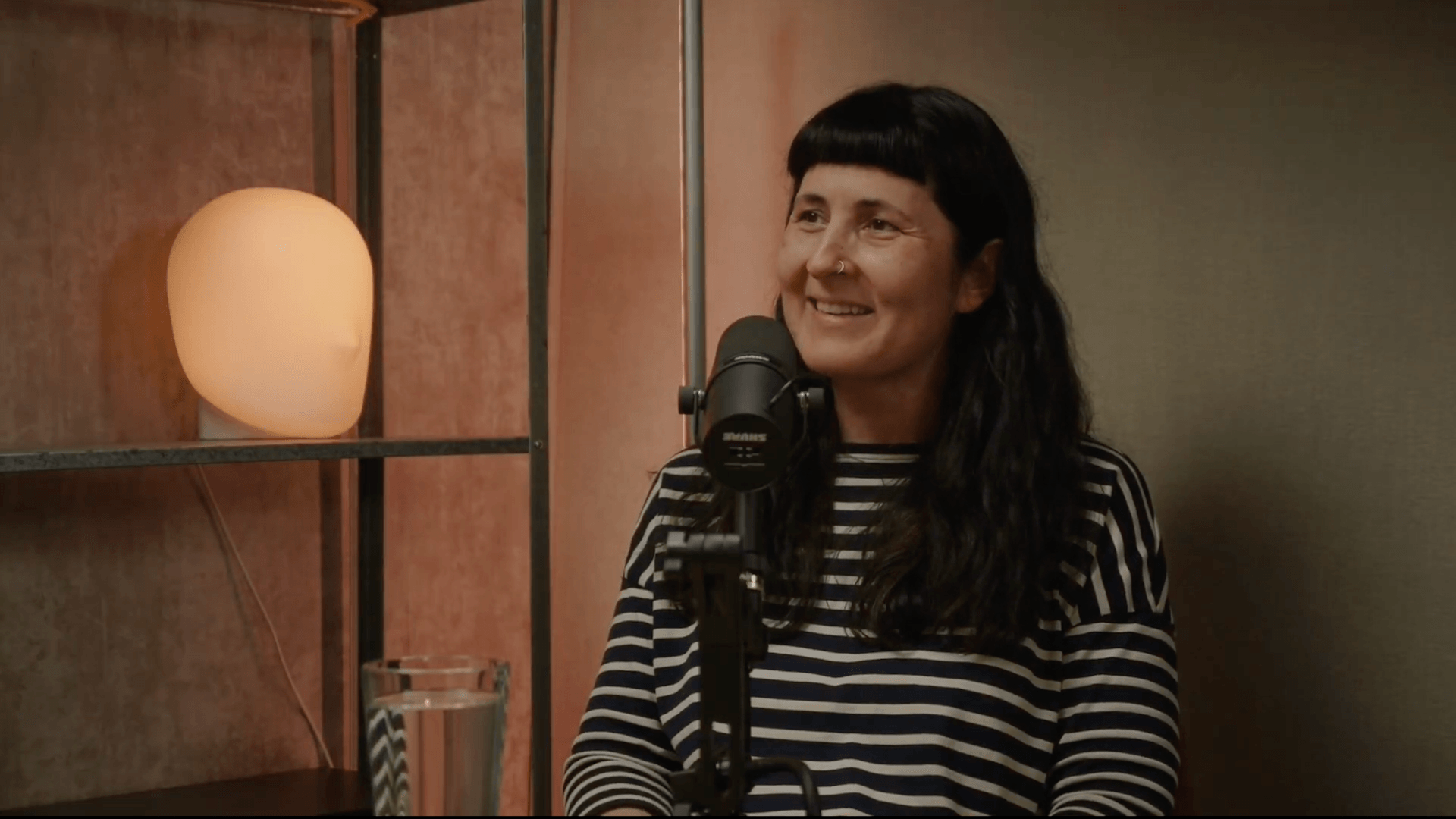
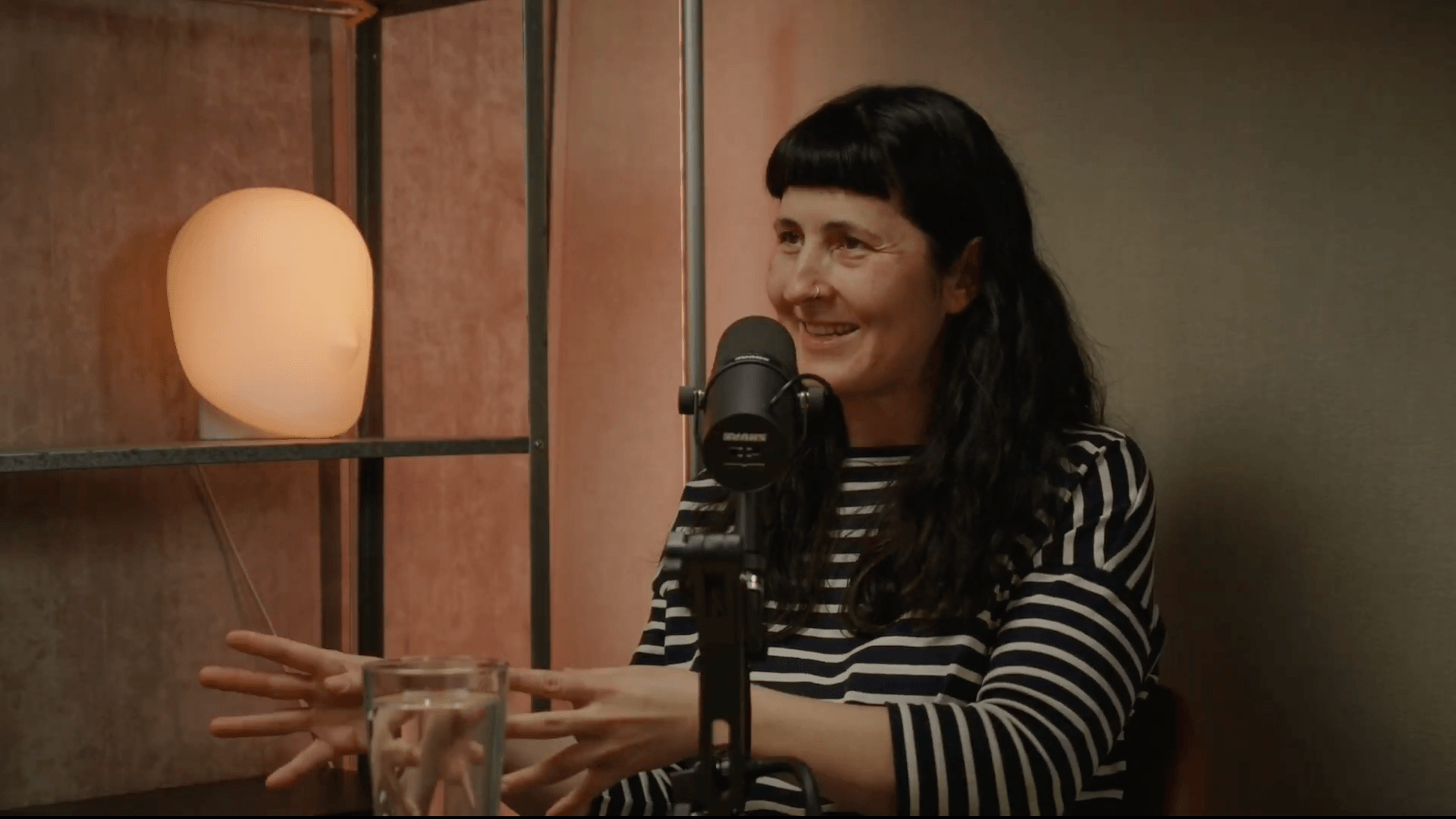
Auður Zoëga
Listen on
Talking Points
- 00:00 — Why perfect parenting can set children up to fail: Auður explains how messiness, recovery, and repair model being human.
- 00:16 — Introduction to Auður Zoëga: An integrative psychotherapist and parent coach supporting families with young children.
- 01:35 — Making parenting more peaceful and connected: Why understanding children’s actual developmental needs can make family life easier.
- 04:08 — The four conditions children need to grow: Relationship, permission to feel, psychological rest, and self-directed play.
- 06:40 — Play without goals or consequences: Creating a “yes space” where children can explore without constant interruption.
- 08:50 — Resting in the relationship: Why children need to take a caregiver’s love and availability for granted.
- 10:32 — Feelings are allowed; behaviour can still be stopped: Separating emotional acceptance from boundaries around kicking, hitting, or damage.
- 12:52 — Why parents search for the right technique: Moving from external rules towards self-trust and authentic leadership.
- 14:05 — Seeing a meltdown through a softer lens: How a change in perspective moves a parent out of judgement and power struggle.
- 17:35 — When the parent becomes flooded: Taking space, returning to regulation, and repairing after a reaction.
- 19:44 — Power-over versus leadership: A good leader listens, collaborates, and still carries adult responsibility.
- 22:16 — Needs are not always met in the way a child requests: Finding flexible ways to offer closeness while still going to school or work.
- 27:44 — The emotional cost of harsh discipline: How imposed separation, shame, and rejection can teach a child that feelings are unsafe.
- 31:00 — “Nothing is wrong”: Holding a firm boundary without turning a normal developmental struggle into an emergency.
- 35:44 — Gentle parenting and the messy middle: Why nurturing connection and setting boundaries are not opposites.
- 39:04 — When permissiveness becomes a burden: Children can become anxious when they feel more powerful than the adults around them.
- 43:19 — Parental triggers and the role of therapy: Why intellectual knowledge is different from an embodied capacity to tolerate emotion.
- 47:00 — Misinformation, milestones, manners, and sharing: How children develop values through relationship and modelling rather than forced compliance.
- 51:43 — Resting in love instead of earning it: Parentification, conditional connection, and why love must be experienced as a verb.
- 57:16 — Good enough parenting, not perfection: Parents can be proud, make mistakes, recover, and model a realistic human life.
- 59:53 — Dysregulation, return, and repair: Children learn that difficult moments can pass and relationships can recover.
- 1:03:35 — The parent’s grounding practice: Meditation, movement, creativity, or a quiet cup of tea can support steadier leadership.
- 1:04:11 — Parenting the child in front of you: Letting real needs and capacities guide you instead of becoming fixed on one ideal approach.
- 1:07:26 — What if I have already made mistakes?: Acknowledge, listen, repair where needed, then let shame go and move forward.
- 1:12:45 — What grows from a secure foundation: Self-trust, freedom, curiosity, and the capacity to learn from life’s ups and downs.
- 1:16:47 — Roots before fruit: Why development is often invisible before confidence, maturity, and values begin to blossom.
- 1:18:46 — Be your child’s answer: Your child needs your relationship and presence more than a perfect response to every problem.
Transcript
- 00:00 — Opening
Auður: If I were the perfect parent and did everything perfectly, that could set my daughter up for failure because she would have to live up to it. Instead, she can see that you can be messy and still be good enough. You can repair, get up, and keep going.
Laura: Parenting is a continual experiment in compromising the ideals we had about what we would do and who we would be. Life can be different from what we imagined. We have to parent the child in front of us and ask: what are their needs, and what are our needs, right now?
- 00:16 — Introduction
Laura: Today I’m joined by Auður Zoëga, an integrative psychotherapist whose work is grounded in the importance of human relationships and in how our past and present experiences shape who we become. She has a special interest in helping parents of young children heal from their own childhood experiences so they can parent with more awareness, choice, and alignment.
You’re listening to The Right Therapist, where we demystify therapy.
We acknowledge the Traditional Custodians of the lands on which we live and work. We pay our respects to Elders past and present and extend that respect to all Aboriginal and Torres Strait Islander peoples listening today.
Welcome. Could you tell us a little more about your work and your philosophy?
Auður: I work as a therapist and coach with parents, particularly parents of young children. I help them understand both their children and themselves so they can have more peaceful, joyful, connected lives together. Parenting can be much easier than our culture has led us to believe. We have many things backwards, and it is making life harder for both parents and children.
- 04:08 — What Children Need to Grow
Auður: At the heart of it, we can trust much more that children are born with the drives and capacities they need to develop. Our role is to provide the conditions in which development can unfold.
Drawing on the attachment-based developmental work of Gordon Neufeld, Auður describes four interconnected conditions: a close and dependable relationship; permission to experience the full range of feelings; psychological rest within that relationship; and spontaneous, self-directed play.
Play is spontaneous, without goals or consequences, and directed by the child. A game designed by an adult to produce a learning outcome may be valuable, but it is not play in this sense. For true play to happen, children first need to feel at rest.
- 06:40 — Play, Rest, and a “Yes Space”
Laura: When I hear ‘play without consequences’, I think of my daughter creating something and me arriving with, ‘Not the hot-glue gun on the floor.’ I need to set her up so she can be freer in her play.
Auður: That is what Janet Lansbury calls a ‘yes space’: an environment designed for play and exploration with as little need as possible for adults to say no, stop, or redirect. Constant intervention can interrupt a child’s flow.
Rest here means psychological rest. A child does not have to work at the relationship, monitor the adult, or earn connection. There is an oversupply of relationship, so they can take it for granted and let go.
- 09:23 — Soft Hearts and All Feelings
Auður: To rest, children need ‘soft hearts’: they need to be able to contact all their feelings. Every feeling can be welcome and safe when there is a warm, nurturing adult who can tolerate it and show that feelings come and go. Some are uncomfortable, but that does not make them wrong.
Laura: Parents can struggle with the intersection between accepting a feeling and accepting behaviour that is not okay. How do we navigate that?
Auður: The feeling and the behaviour can be separated. We can set a boundary around behaviour while allowing the feeling. We may need to stop a child physically and safely, but we do not have to communicate that their anger, frustration, or sadness is bad.
- 12:52 — Looking for the Perfect Response
Laura: When a child is overwhelmed and cannot follow an instruction, that is where I can move into punishment. What can a parent do in that moment?
Auður: Before we reach for a technique, it is worth noticing how quickly parents look outside themselves for the right answer. We are challenged and triggered, understandably, but constantly searching for a formula can pull us away from trusting ourselves as the leaders our children need.
Laura: I do want you to tell me the solution — the thing I can do to make the situation easier or stop it from happening.
Auður: First notice the lens. If we see a child as bad, entitled, manipulative, or attention-seeking, harshness and disconnection follow. If we see a child having a hard time — doing something they do not want to do and cannot yet stop — a very different response becomes possible.
- 14:05 — The Softer Lens
Laura: Through the harsher lens there is an immediate disconnection: I’m right, you’re wrong, and you need to be different. Through the softer lens I feel more like my adult self. I am less caught in a power struggle and more able to see that my child is struggling.
Auður: If the parent is flooded, the parent may need a time-out — a little space to step aside, collect themselves, and avoid passing that flooding on.
Laura: Later, the soft heart often returns and parents think, ‘If only I had been able to access this when it was happening.’ But regret can lead us towards repair: talking about what happened and owning that we reacted too harshly.
Auður: Repair models many positive qualities. Reflection and regret are not proof of failure; they can steer the action that comes next.
- 19:44 — Leadership Rather Than Power-Over
Laura: What is the difference between exercising power over a child and leading them?
Auður: A good leader listens, invites people in, and allows collaboration and conversation. An authoritarian response imposes. Leadership does not mean the adult stops being responsible; it means the adult carries that responsibility without hardening the relationship.
Laura: What do you say to the parent wondering, ‘What is wrong with my child?’
Auður: Their child is immature and impulsive, as children are, and may have needs that are not being met. There is not something fundamentally wrong with them. Their behaviour is showing us that they need help.
- 22:16 — Needs, Wants, and Flexible Boundaries
Laura: If a child does not want to go to school because they do not want to separate from a parent, their need for closeness may be real. But the need does not necessarily have to be met by staying home.
Auður: Exactly. We can locate the underlying need and find a way to offer more closeness while still getting to school. A need and the particular way a child asks for it are not always the same thing.
- 24:40 — Holding a Boundary Without Shame
Laura: When I am grounded and centred, I can lead quite easily. My child follows and relaxes. She may still have a meltdown, but it is shorter and more tolerable. When I am not grounded, it becomes a power struggle.
Auður: It helps to understand why we do not want the harsh, disciplinary response even when it appears to work. Imagine being a child in distress and being scolded, sent away, or threatened with separation. Shame, sadness, anger, and the feeling of being misunderstood arise. A child may learn that this emotion risks losing the relationship.
Laura: Then, as adults, we may experience that same emotion and expect judgement, rejection, or shame — which is so much of what therapy later helps us undo.
- 29:43 — “Nothing Is Wrong”
Auður: The most important work is the way we see the child. From a generous lens, parents can find an authentic response that is loving and still contains a boundary.
Laura: The most useful phrase for me is: ‘Nothing is wrong.’ Nothing is wrong with the feeling, the repetition, or the fact that my child is having a meltdown. I will still stop the wall from being kicked, but I do not have to turn a normal developmental struggle into an emergency.
Auður: You can block as little as necessary, move the child, or offer something safe to kick. The rest is: this is not an emergency. The child experiences that steadiness through how you are with them, not through a lecture.
They discuss how parents can attach an invented future to a present behaviour — fearing that one meltdown means a child will become a rude, aggressive, or incapable adult. That fear can make a developmentally normal moment feel urgent and dangerous.
- 35:44 — Gentle Parenting and the Messy Middle
Laura: What do you make of the gentle parenting movement?
Auður: I am a fan of it in general, but there is confusion. Parents can feel they must choose between nurturing the relationship without boundaries or setting boundaries in an authoritarian way. In reality there is a messy middle where connection and boundaries both matter.
Laura: Some parents try so hard not to repeat authoritarian parenting that they become permissive — saying yes and protecting their child from every difficult emotion.
Auður: The intention is loving, but children need to experience frustration, disappointment, and other people’s needs. When everything revolves around a small child, that power can be frightening. Children want to feel the adults have things in hand so they can rest.
Laura: So leadership sits between power-over and following the child. The extremes feel more certain, but real family life requires judgement, flexibility, and navigation in the moment.
- 43:19 — Parental Triggers and Therapy
Laura: What work do parents need to do on themselves?
Auður: It varies, but when a parent is frequently triggered or flooded by feelings that are out of proportion to what is happening, that can signal something unresolved that needs understanding, kindness, and processing. Therapy can help us reconnect with our own earlier experience before we try to practise new behaviours.
Laura: You can know all the research about mindfulness, but without practising it you do not receive the benefit. Therapy similarly gives us a contained experience of feelings we may have learned to avoid.
Auður: Then we develop an embodied sense that feelings are okay, rather than only an intellectual belief. That makes it more possible to tolerate our child’s feelings in the heat of the moment.
- 47:00 — Modelling Instead of Forcing
Auður: There is also misinformation about what parents must directly teach. We are told we need to entertain children, develop their motor skills, make them share, solve their conflicts, and prompt manners constantly. Children can learn these things more organically through development, relationship, and modelling.
If a child gives something only because a parent instructed them to, that is compliance rather than generosity. Genuine sharing comes from an inner impulse. A real yes also depends on being allowed to have a no.
Laura: And if children feel warmly connected to us, they naturally want to be like us. They experience being thanked and hear us thank others. The relationship becomes the foundation from which values grow.
- 51:43 — Resting in Love
Laura: The opposite of resting in a relationship is the child who has to monitor a parent’s needs, manage their emotions, or behave in a way that keeps the parent okay.
Auður: That is exhausting and devastating. The person responsible for protecting the child also becomes someone the child must protect themselves from. It is a double bind.
Laura: So the four needs are self-directed play, psychological rest, permission to feel every feeling, and an unconditional, attuned relationship.
Auður: Yes. Unconditional means: whatever you feel and however difficult this moment becomes, I am still your parent, I still love you, and I remain available. A child should not fear that an emotion or behaviour will cost them the relationship.
Love is a verb. Parents may feel enormous love and want the best for their child, but children experience love through how their needs are met. Many of us have to learn what emotional safety looks like because our own parents did not have that learning either.
- 56:29 — Good Enough, Not Perfect
Laura: Would you be a different parent if you had never gone to therapy?
Auður: Definitely. Therapy, training, and learning about development have changed me. I am still working on things, but I reached a good-enough place before having my daughter.
Laura: Are you proud of how you parent?
Auður: I am — and I can say that while regularly seeing my oversights and faults. Continuing to learn is part of what I am proud of. I am not aiming for perfection. A perfect parent would give a child something impossible to live up to. A real parent shows that you can be messy, repair, and still be good enough.
- 59:53 — Dysregulation, Return, and Repair
Laura: My therapist once reframed a moment when my child had a meltdown and I eventually had one too. She said I was modelling movement into dysregulation and back into regulation. Things fell apart, and then they improved. We recovered and repaired.
Auður: Children learn not only from what we do when they are distressed, but from watching us experience and manage ourselves. They absorb manners, values, and ways of returning through being around us.
Laura: The aim is not full-time regulation. That would not be life. It is the capacity to move through activation and return.
- 1:03:35 — Grounding and Parenting the Child in Front of You
Laura: For me, meditation helps me find a centred adult position. If I start the day without even five or ten minutes, I can be pulled into my child’s vortex. When I am grounded, she can have her experience while I continue to lead.
Auður: That supportive practice will be different for everyone — movement, creativity, a run, or even a quiet cup of tea. In my own parenting, what is landing most strongly is the importance of parenting the child in front of me.
Children vary enormously in their needs and capacities. I still make the best decisions I can as the adult, but I also ask: what am I seeing right now? What does my daughter need? What makes her glow? And how do we care forthe needs of the whole family? Parenting is an experiment. There is no single ‘way’ that is right in every moment.
- 1:07:26 — Mistakes, Shame, and Repair
Laura: What would you say to parents who are afraid they have already made mistakes and harmed their children?
Auður: It is good that you have realised something and can do it differently from here. Depending on the child’s age, repair may include acknowledging what you did, saying that you now see it differently, and being willing to hear their experience. Then let it go and move forward. Children and families are adaptive.
Laura: Going into compensation or fixing mode can repeat the message that something is wrong with the child because of what we did.
Auður: Yes. Own what is yours without making the child small or incapable. We will all make mistakes. Repair where it is needed, listen, and then keep living the relationship differently.
- 1:12:45 — What Grows From a Secure Foundation
Auður invites the host to imagine being a child whose parents are dependable, protective, interested, and delighted to know them — while not requiring the child to perform or meet the adults’ emotional needs.
Laura: I feel light, free, and loved — but it is not only about them. I can feel self-love. I can take their love for granted, and there is no self-criticism or insecurity.
Auður: That frees a child to learn, grow, make mistakes, and have experiences. Their needs being met communicates: I can trust myself. I can feel my feelings and learn from them. I have the guidance and support of people who have been here longer than I have. I can rest, play, explore, and learn.
Laura: The baseline becomes: I am okay, and things can be okay even when something difficult is happening.
- 1:16:47 — Roots Before Fruit
Auður: Gordon Neufeld often uses the analogy of a plant. A child first needs good soil and deep roots. Much of early development is invisible. Later we see the fruit and the blossom, but adults and our culture often demand the fruitimmediately.
Laura: We ask why a child is not already polite, calm, or behaving like an adult, when they are still putting down roots through struggle, dysregulation, relationship, and return.
Auður: You are your child’s best bet. They do not need you to know the answer to every detail. They need you to be with them. We want to be our child’s answer, not necessarily to have all the answers. The fundamental need is the relationship: a solid person travelling with them through the messiness of life.
- 1:20:12 — Closing
Laura: If this conversation resonated with you, hit subscribe and click the link below to download the Source app. It’s free to get started and helps you find a therapist who truly fits — fast.
- Closing Reflection
Good parenting is not the elimination of conflict, difficult emotion, or mistakes. It is the steady return to relationship: leading without shaming, holding limits without withdrawing love, and repairing when things go wrong.
Children do not need adults who perform perfection. They need dependable people who can remain present, keep learning, and help them build roots strong enough for play, feeling, exploration, and growth.
Resources
No resources available.
Contact the therapist

Auður Zoëga